
The Shopify App Store has over 13,000 apps. For most merchants, the answer to any operational challenge is somewhere in that catalogue. But there is a point where off-the-shelf stops working — where the apps you need either do not exist, do not integrate with each other properly, or create more problems than they solve.
That is where custom Shopify app development enters the conversation. And it is a conversation that more UK merchants are having as their operations grow more complex and their tolerance for duct-taped solutions wears thin.
We have built custom apps for merchants across dozens of sectors. Some replaced five paid apps with a single, focused solution. Others connected Shopify to internal systems that no public app could reach. A few were genuinely novel — solving problems that nobody else had tackled because the market was too niche to attract a SaaS product.
This guide covers when custom development makes sense, what it actually involves, and how to approach it without burning through your budget.
When a custom app is the right call
Custom app development is not always the answer. It is expensive, it takes time, and it creates a maintenance obligation that lasts as long as the app is in use. But there are scenarios where it is unambiguously the correct decision.
Your business process is genuinely unique
Some operational workflows simply do not map onto any existing app. A UK-based food brand we worked with needed a production scheduling system that tied Shopify orders to batch manufacturing cycles, ingredient sourcing lead times, and shelf-life calculations. No app in any store was going to handle that because no SaaS company can build a profitable product for such a niche use case.
The key question is whether your process is unique because your business genuinely operates differently, or whether you are overcomplicating something that standard tools handle well. Most of the time, it is the latter. But when it is genuinely unique, custom is the only path.
Your app stack is creating performance problems
Every Shopify app you install has a cost beyond its monthly subscription fee. Apps inject JavaScript into your storefront, add HTTP requests, and compete for browser resources. When you are running 15 or 20 apps, the cumulative performance impact is significant. We have seen stores where the app stack alone added 3-4 seconds to page load time.
A custom app can replace multiple existing apps with a single, optimised solution. Instead of five apps each loading their own JavaScript bundles and making their own API calls, you have one app that handles everything with a fraction of the overhead. This is particularly relevant for stores where auditing the app stack reveals that performance degradation is primarily app-driven.

You need deep integration with internal systems
Public apps are built for the broadest possible audience. They integrate with popular tools — Mailchimp, HubSpot, Google Sheets — but they rarely handle proprietary internal systems. If your warehouse runs custom software, your accounting uses a bespoke ERP, or your CRM is an in-house build, you are looking at custom development.
The integration challenge is not just about connecting two systems. It is about handling data transformation, error states, retry logic, and the inevitable edge cases where the two systems disagree about what a "product" or an "order" actually is. Off-the-shelf integration tools like Zapier or Make can handle simple scenarios, but they fall over quickly when the data mapping is complex or the volume is high.
The economics favour building
This is the scenario that surprises most merchants. When you add up the monthly cost of four or five paid apps, each charging £50-£200 per month, you are spending £3,000-£12,000 per year on tools that do not quite do what you need and create support headaches every time Shopify updates its platform.
A custom app might cost £15,000-£25,000 to build, with annual maintenance of £3,000-£5,000. Over a three-year horizon, the economics often favour custom. And you get a solution that does exactly what you need, performs better, and is entirely under your control.
When it is not
We talk as many clients out of custom development as we talk into it. Here are the scenarios where building your own app is the wrong call.
An existing app does the job well enough
Good enough is good enough. If an existing app handles 90% of your requirements and the remaining 10% is a nice-to-have, use the existing app. Custom development for marginal improvements is a waste of money.
You are solving a problem that will change
If your operational processes are still evolving — you are in your first year of trading, your fulfilment model is shifting, your product catalogue is changing shape — building a custom app locks you into a solution that may not fit in six months. It is better to use flexible, configurable off-the-shelf tools while your processes stabilise, then build custom once you know exactly what you need.
You do not have the budget for ongoing maintenance
Building the app is only half the cost. Shopify updates its APIs regularly. Breaking changes happen. Security patches are required. If you cannot commit to ongoing maintenance — typically 15-20% of the initial build cost per year — the app will gradually degrade and eventually break entirely.

Types of custom Shopify apps
Not all custom apps are equal in scope or complexity. Understanding the different types helps you scope your project accurately and set realistic expectations for timeline and budget.
Admin extensions
These are the lightest form of custom development. Admin extensions add custom UI directly into the Shopify admin panel using Shopify's App Bridge and Polaris design system. They do not have their own backend infrastructure — they run entirely within the Shopify admin context.
Common use cases include custom metafield editors, bulk operation tools, and reporting dashboards that pull data from Shopify's APIs and present it in a format tailored to your team's workflow. Build time is typically 2-4 weeks, and hosting costs are minimal because the code runs in the browser.
Storefront apps
These apps modify the customer-facing experience. They might add a custom product configurator, an interactive size guide, a bespoke subscription builder, or a loyalty programme that integrates with your CRM. Storefront apps are more complex because they need to perform well under load, handle customer data securely, and integrate seamlessly with your theme.
The performance implications of storefront apps are significant. A poorly built storefront app can tank your conversion rate by adding seconds to page load time. This is one area where custom development, done well, actually outperforms off-the-shelf alternatives because you control every line of code that runs on the page.
Backend integration apps
These apps run entirely behind the scenes. They listen for Shopify webhooks — events like "order created", "product updated", or "inventory changed" — and trigger actions in external systems. Common examples include ERP synchronisation, warehouse management integration, and custom fulfilment workflows.
Backend apps are architecturally simpler in terms of UI (they often have none) but more complex in terms of data handling. They need to be reliable, handle failures gracefully, and process potentially high volumes of events without losing data. Getting the error handling and retry logic right is where most of the development effort goes.
Full-featured standalone apps
These are complete applications with their own backend, database, admin interface, and potentially their own storefront components. They are the most expensive to build but also the most capable. Examples include bespoke order management systems, custom B2B portals, and multi-channel inventory management tools.
Full-featured apps typically take 8-16 weeks to build and require the most ongoing maintenance. They are justified when the business requirement is sufficiently complex and unique that no combination of existing tools can meet it. For merchants operating at scale, particularly those on custom Shopify themes with sophisticated operational requirements, these apps become essential infrastructure.

Architecture and technology decisions
Shopify has strong opinions about how apps should be built, and for good reason. Following their recommended architecture ensures compatibility with platform updates and provides a better experience for merchants installing the app.
The Shopify app framework
Shopify's recommended stack is Remix (a React-based framework) with Node.js on the backend, scaffolded using the Shopify CLI. This gives you OAuth authentication out of the box, session management, webhook handling, and a structured approach to building admin UI with Polaris components.
// Scaffolding a new Shopify app
npx @shopify/create-app@latest

// The CLI generates:
// - Remix app with Shopify authentication
// - Polaris UI components
// - Webhook handlers
// - GraphQL client for the Admin API
// - App proxy configuration
You are not locked into this stack. Shopify apps can be built in any language that can handle HTTP requests and OAuth flows. We have built apps in Python, PHP, and Go when the project requirements demanded it. But the Remix/Node stack has the best tooling, the most documentation, and the fastest path from zero to deployed.
GraphQL versus REST
Shopify maintains both GraphQL and REST APIs, but they are clearly investing in GraphQL as the future. The GraphQL Admin API offers better performance (you request exactly the data you need), higher rate limits, and access to newer features that are not available via REST.
For new custom apps, use GraphQL. The learning curve is slightly steeper if your team is not familiar with it, but the long-term benefits are substantial. Shopify has indicated that new features will be GraphQL-first, and some REST endpoints are being deprecated.
Webhooks and event-driven architecture
Most custom apps need to react to events happening in the store: orders being placed, products being updated, customers being created. Shopify delivers these events via webhooks — HTTP POST requests sent to your app's server when something happens.
Reliable webhook handling is critical. Shopify expects a 200 response within 5 seconds. If your app fails to acknowledge webhooks consistently, Shopify will stop sending them. This means your webhook handler needs to accept the event quickly (by writing it to a queue) and process it asynchronously. Do not try to do complex processing inside the webhook handler itself.
// Webhook handler pattern: accept fast, process later
app.post('/webhooks/orders/create', async (req, res) => {
  // Verify HMAC signature
  if (!verifyShopifyHmac(req)) {
    return res.status(401).send('Unauthorized');
  }

  // Queue for async processing
  await queue.add('process-order', {
    shopDomain: req.headers['x-shopify-shop-domain'],
    payload: req.body
  });

  // Respond immediately
  res.status(200).send('OK');
});
Data storage
Custom apps often need their own database. The choice depends on the data model: PostgreSQL for structured relational data, Redis for caching and session storage, and sometimes a document store like MongoDB for flexible schemas. For most apps, PostgreSQL with Redis caching is the right combination.
One important consideration: data residency. UK merchants handling customer data need to ensure that their app's database is hosted in a jurisdiction that complies with UK GDPR. This typically means hosting in the UK or EU, not defaulting to US-based cloud regions.
The development process step by step
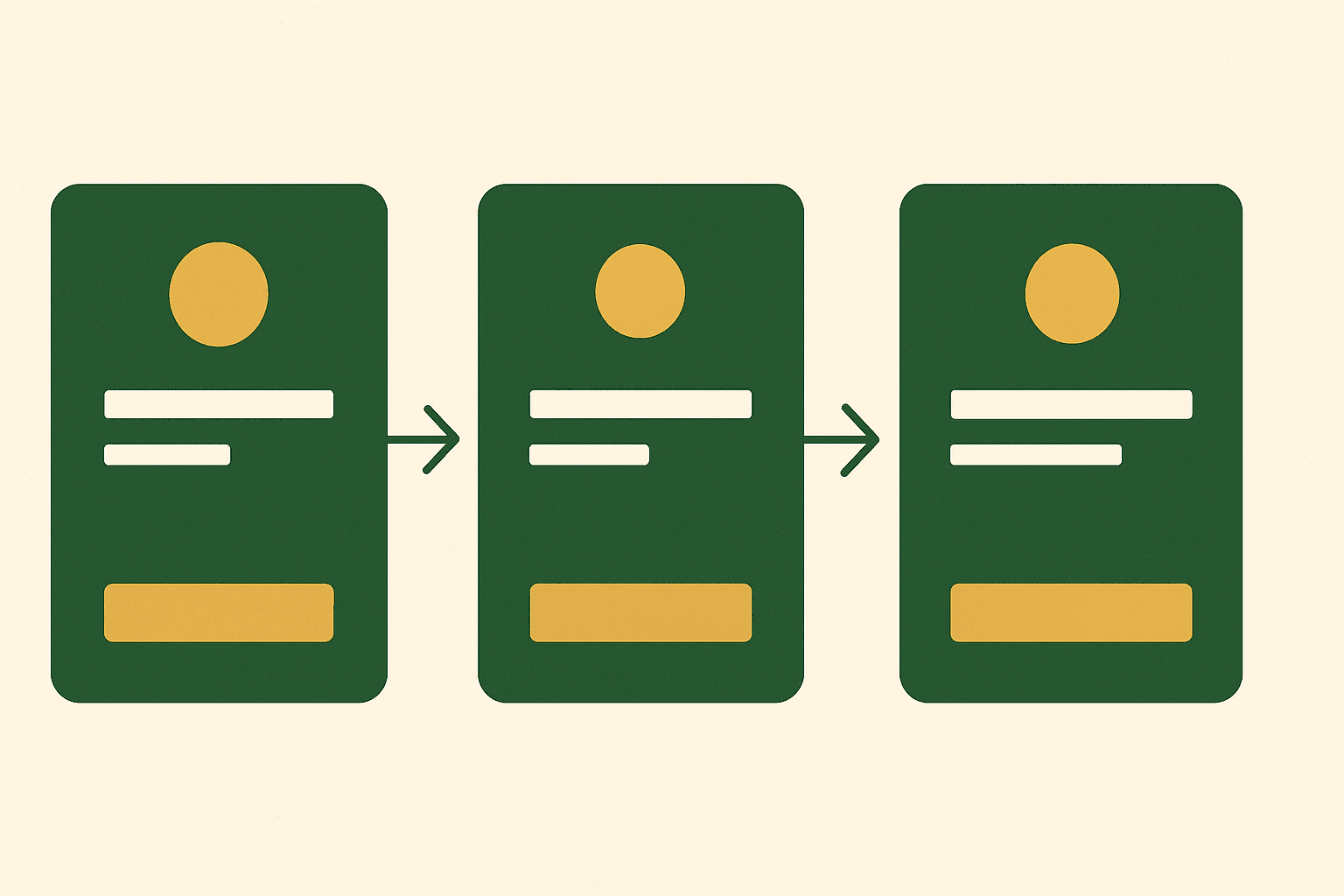
Custom app development follows a structured process. Skipping steps — particularly the specification phase — is the single most common reason projects go over budget and over time.
Phase 1: Discovery and specification (1-2 weeks)
Before writing any code, you need a detailed specification. This document defines exactly what the app will do, how it will integrate with Shopify and any external systems, what the user interface will look like, and how edge cases will be handled.
The specification should include user stories, data flow diagrams, API endpoint definitions, and wireframes for any admin or storefront UI. It should also define what the app will not do — scope boundaries prevent feature creep during development.
Phase 2: Architecture and scaffolding (1 week)
With the specification signed off, development begins with architecture setup: initialising the project, configuring authentication, setting up the database schema, and establishing the deployment pipeline. This phase produces a functioning skeleton app that authenticates with Shopify and displays a basic admin interface.
Phase 3: Core development (3-8 weeks)
This is where the bulk of the work happens. Development proceeds in weekly sprints, with each sprint delivering working functionality that can be reviewed and tested. Regular check-ins with the merchant ensure the app is tracking towards the specification and any issues are caught early.
We follow a strict pattern of building the data layer first (API integrations and database operations), then the business logic, then the UI. This approach means the app's core functionality works reliably before any time is spent on visual polish.
Phase 4: Testing and QA (1-2 weeks)
Testing a Shopify app requires multiple environments: a development store for unit testing, a staging store with realistic data for integration testing, and ideally a production-like environment for performance testing. Automated tests cover the API layer and business logic. Manual testing covers the UI, edge cases, and the installation flow.
Security testing is particularly important for apps that handle customer data or payment information. At minimum, this includes checking for cross-site scripting (XSS) vulnerabilities, ensuring all API endpoints require authentication, and verifying that webhook HMAC signatures are validated correctly.
Phase 5: Deployment and monitoring (1 week)
Deploying a Shopify app means hosting it on infrastructure you control. We typically use cloud platforms with auto-scaling capability, ensuring the app can handle traffic spikes during peak trading periods. Monitoring is set up from day one: error tracking, performance metrics, and alerts for webhook delivery failures.
The deployment phase also includes creating documentation for the merchant's team: how to use the app, how to troubleshoot common issues, and who to contact if something goes wrong.
Costs and timelines
Let us be transparent about what custom Shopify app development actually costs in the UK market.
| App type | Typical cost | Timeline | Annual maintenance |
|---|---|---|---|
| Admin extension | £3,000 - £8,000 | 2-4 weeks | £500 - £1,500 |
| Storefront app | £8,000 - £20,000 | 4-8 weeks | £1,500 - £3,000 |
| Backend integration | £10,000 - £25,000 | 4-8 weeks | £2,000 - £4,000 |
| Full-featured standalone | £20,000 - £50,000+ | 8-16 weeks | £4,000 - £10,000 |
These figures assume a UK-based development team with Shopify-specific experience. You can find lower quotes from offshore teams, but the risks — communication difficulties, timezone gaps, and unfamiliarity with UK business practices and data regulations — often outweigh the savings.
The maintenance column is critical. A custom app is a living piece of software. Shopify pushes API updates, deprecates endpoints, and changes platform behaviour. Your app needs ongoing attention to stay functional and secure. Budget for it from the start or do not build at all.
Ongoing maintenance and iteration
The launch is not the end of the project. It is the beginning of a long-term maintenance commitment. Understanding what that commitment entails is essential before deciding to build.
API version management
Shopify releases new API versions quarterly and supports each version for approximately one year. When your app's API version reaches end of life, you need to upgrade to a supported version. This typically requires testing, code changes, and deployment. Budget 2-4 days of development time per quarterly upgrade, depending on how many breaking changes the new version introduces.
Security patching
Dependencies in your app's technology stack will have security vulnerabilities discovered over time. Node.js packages, database drivers, and framework components all require regular updates. Automated dependency scanning tools help identify vulnerabilities, but applying patches and testing the results requires developer time.
Feature iteration
Once the app is in production, you will inevitably want to add features. The advantage of a custom app is that you can iterate quickly without waiting for a third-party vendor to prioritise your feature request. Build a backlog, prioritise ruthlessly, and iterate in short sprints. As part of your broader Shopify development strategy, your custom apps should evolve alongside your store.

Choosing the right development partner
If you are not building the app in-house, choosing the right development partner is the most consequential decision in the project. Here is what to look for.
Shopify-specific experience
Shopify app development is not generic web development. The platform has its own authentication model, its own API conventions, its own UI framework, and its own deployment patterns. A developer who is excellent at building Rails applications but has never built a Shopify app will spend weeks learning the platform's idiosyncrasies — on your budget.
Ask to see other Shopify apps they have built. Ask about their experience with Shopify's GraphQL API, Polaris components, and webhook handling. Ask how they handle API version upgrades.
Code ownership
Ensure your contract gives you full ownership of the code. This seems obvious, but many development agencies retain intellectual property rights over work they produce, even when clients pay full development costs. You should own the code, have access to the repository, and be able to engage a different developer for future maintenance if the relationship does not work out.
Post-launch support
Ask about their approach to ongoing maintenance before you sign. Do they offer maintenance retainers? How do they handle urgent issues outside business hours? What is their response time SLA? A developer who builds the app and walks away is leaving you with a ticking time bomb.
We offer dedicated app development and support retainers for exactly this reason. Custom apps need ongoing attention, and the team that built the app is best placed to maintain it.
The best custom app projects start with a clear specification and end with a clear maintenance plan. Everything in between is execution. Get those two bookends right and the project will almost certainly succeed.
Andrew Simpson, Founder
Custom Shopify app development is a serious investment, but for the right use cases, it delivers returns that no combination of off-the-shelf apps can match. The key is honest assessment: is your requirement genuinely unique, do the economics work over a 3-5 year horizon, and can you commit to ongoing maintenance?
If the answer to all three is yes, custom development is almost certainly the right path. If you are unsure, start a conversation with us. We will give you an honest assessment of whether building custom is the right call for your specific situation.