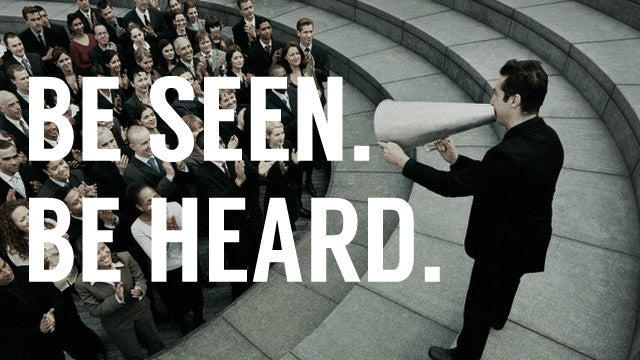
In 2015, visual content is where it’s at. Although you reading this post about how video, image and infographic content is blowing up means that there’s still a place in the content marketing game for word slingers like myself, this year you’re probably going to be spending more time looking, seeing and hearing.
This isn’t some radical content marketing prediction that’s going to redefine the game this year – I ain’t no Rand Fishkin. What I’m saying is obvious; science proves it and our habits reinforce it.
The science:
- 90% of information transmitted to the brain is visual [Source]
- Visuals are processed 60,000X faster in the brain than text [Source]
- People retain 80% of what they see [Source]
- It takes the brain 1/4 second to process visual cues [Source]
- The average attention span of consumers 8 seconds [Source]
The habits:
- Visuals get 94% more views than text-based information [Source]
- Visual content is 40X more likely to be shared [Source]
- Infographics increase Web traffic by an average of 12% [Source]
- Viewers spend 100% more time on pages with visual content [Source]
- Photos, pictures and videos and get over 100% more engagement [Source]
Visuals are already a big deal, they have been since 2012. This year, though, they’re going to be huge and you need to get involved.
As much I’d like to push the benefits of written content down your throat (I will do this at some point), I can’t argue with the facts – visual content is better than text, especially where brand promotion is concerned.
Content that Works
So visuals are leading the way in content marketing and you’re ready to throw some money at them. What sort of eye candy should you be pushing?
Social media holds the answers. Take a look at your Facebook and Twitter feeds; which posts have the most likes, shares, retweets and comments? Without even having looked at your social accounts, I can tell you with the upmost confidence that images, memes, and videos – especially those of 30-seconds or less – are the most popular. No standard text status update comes close.
This is the type of content you need to put your weight behind.
Memes
By definition a meme is “an activity, concept, catchphrase or piece of media which spreads, often as mimicry, from person to person via the Internet.” Apparently they may take the form of images, hyperlinks, videos, pictures, websites or hashtags, but the only type you’ll really be using are the ones that look like this:

A popular, yet slightly weird, image with some humorous, but relevant text.
People love memes, they get clicks and are primed for sharing. Combine with some choice hashtags and you’re laughing.
Images
Pinterest and Tumblr were the fastest growing social platforms last year, with active users increasing by 110% and 120% respectively. Worth noting is that these sites are where all the cool kids hangout too – 70% of users on each are aged 16-34.
Pinterest is all images and 50% of posts on Tumblr are photos. Whether you’re snapping selfies around the office or sharing images of new products, people like to browse through good photos. You’ve got to be creative and original with your posts though; nobody wants to know about your latest preference for a rocket salad lunch five days a week.
Oh and let’s not forget about Instagram – there are more active users there than Twitter – 300 million vs. 284 million, not that the latter’s co-founder could give a s**t.
If the under 25 audience is your demographic, you probably want to consider SnapChat – for photos and videos. Brand adoption is still in its infancy, but with 71% of 600 million monthly active users in their teens or early twenties there is definite potential. Besides you only ever have to bother someone for a few seconds.
Videos
Videos are a no brainer really. 85% of online users visit YouTube every month to watch 6 billion hours of video. If you haven’t already, now’s the time to make the most of that free YouTube account you got when you signed up for “One account. All of Google.”
Company introductions, product reviews, instructional videos, videos of your dog driving the company car, whatever – they’ll always be someone interested in your videos, providing you know what you’re doing. Check out this article on how to make sure people watch your videos.
YouTube should be the main focus of any video marketing campaign, but don’t discount Vimeo or DailyMotion, both have active monthly users in the millions. Definitely don’t ignore the latest obsession with Vine either. Six-second videos on this platform are viral gold on social media. Take a look at the sort of numbers these guys are doing, mostly for doing dumb stuff.
Infographics
Infographics are arguably the greatest alternative to stand text posts. If you’ve got some facts and stats that you think people would be interested in, a fun, creative infographic, gifographic or, if you’re feeling particularly fancy, an animated infographic, is a great way to engage them. Look at it this way: would you rather read a page of bullet-point stats a la me at the top of this post or consume info like this?

Or this:

Or this:
:
No contest really is it?
Slides

SlideShare has been around for a while with little fanfare and few decent presentations, but things have been on the up since it was purchased by LinkedIn back in 2012. The site is currently averaging more than 60 million unique visitors a month and receives more traffic from business owners than Facebook, Twitter, YouTube and LinkedIn. If you’re in the B2B game, a good SlideShare could be excellent for business. The great thing about this platform is that you don’t necessarily need to focus on consistently producing great content. Old content that you’ve previously used for blogs, articles or eBooks can easily be repackaged and promoted as new. If you use Reddit, you’ll know just how beneficial this can be.
Memes, videos, images, slides – if your content can be seen and heard (and good, of course) you can expect great things from your content marketing, now and for the foreseeable future.
Go forth and create a visual feast! And if you need any help, our design and video productions teams are always here to help.
Need Help With Your SEO or Ecommerce Strategy?
This article was originally published on the Pea Soup Digital blog. We've been helping UK ecommerce brands with SEO, Shopify development, web design, and Klaviyo email marketing for over 20 years.
If you'd like to discuss how we can help your business grow, get in touch for a free consultation.