Collection pages are arguably the most powerful SEO pages on a Shopify store, yet most merchants barely optimise them. While product pages compete for long-tail, specific queries, collection pages target the high-volume category terms that drive the bulk of organic traffic in ecommerce.
Think about how people search. Before a customer searches for “Nike Air Max 90 black size 10”, they search for “mens running shoes” or “black trainers”. Those category-level queries land on collection pages — and if yours are not optimised, you are losing that traffic to retailers who have done the work.
This guide covers every step of collection page optimisation on Shopify, from keyword mapping to technical implementation. If you want the broader context, our complete Shopify technical SEO guide covers the full picture.
Why collection pages matter for SEO
Collection pages sit at the intersection of search intent and commercial value. They target informational-commercial queries — terms where the searcher knows what category they want but has not yet decided on a specific product.
Higher search volume than product pages
Category-level keywords consistently have higher search volumes than specific product queries. “Mens leather boots” gets significantly more searches than any individual boot model. A well-optimised collection page can capture this broader demand and funnel it toward your products.
Google prefers collection pages for category queries
Search the category terms relevant to your store and look at the results. For most ecommerce category queries, Google ranks collection or category pages, not individual product pages. Google understands that someone searching “organic baby clothes” wants to browse options, not land on a single product.
Collection pages distribute link equity
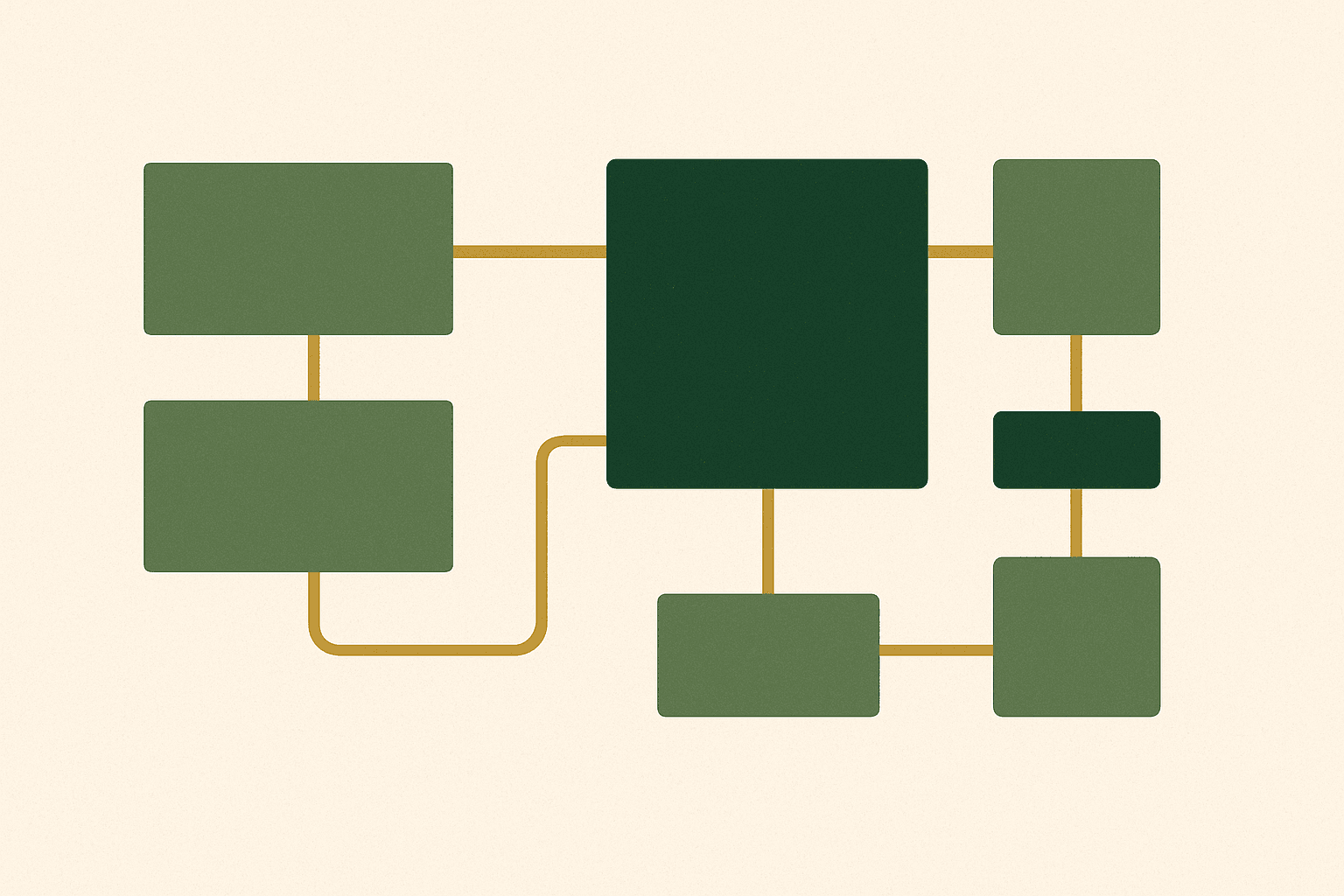
Collection pages are internal linking hubs. Every product listed on the collection page receives a link, and every internal link to the collection page passes authority to all those products. Strengthening your collection pages strengthens every product they contain.
Step 1: Map keywords to collections
Every collection page should target a specific keyword or keyword cluster. This starts with research.
Identify category-level keywords
Use keyword research tools (Ahrefs, SEMrush, or Google Keyword Planner) to find the category terms your customers search for. Focus on terms that indicate browsing intent rather than specific product intent.
Examples of good collection keywords:
- “womens running shoes” (not “Nike Air Max 90”)
- “organic skincare” (not “organic vitamin C serum 30ml”)
- “dog harnesses” (not “medium padded dog harness red”)
Create a keyword-to-collection map
Build a spreadsheet that maps each target keyword to a collection. One keyword per collection — if you have two collections targeting the same keyword, they will cannibalise each other. If you find gaps where you have keywords but no collection, create new collections. If you have collections with no keyword opportunity, they may not need to exist from an SEO perspective.
Consider creating subcollections
For broad categories, create a hierarchy of collections. “Womens shoes” might be a parent collection with child collections for “womens running shoes”, “womens boots”, and “womens sandals”. Each targets a different keyword and serves a different search intent. This mirrors how our product filtering guide approaches navigation architecture.
Step 2: Optimise title tags and meta descriptions
Title tags are the single most impactful on-page SEO element for collection pages. Get these right before anything else.
Title tag formula
A proven format for collection page title tags:
[Primary Keyword] - [Qualifier or Benefit] | [Brand Name]Examples:
- “Womens Running Shoes - Lightweight & Breathable | Peak Outdoors”
- “Organic Baby Clothes - GOTS Certified Cotton | Little Leaf”
- “Dog Harnesses - No-Pull & Padded Designs | Walkies Co”
Keep title tags under 60 characters to avoid truncation. Include the primary keyword as close to the beginning as possible.
Meta descriptions that earn clicks
Write meta descriptions under 155 characters that include the keyword and a compelling reason to click through. Mention specific benefits, product counts, or unique selling points.

URL handle optimisation
Shopify generates collection URLs from the collection title. Edit the URL handle to include your target keyword in a clean, readable format. Keep it short and descriptive: /collections/womens-running-shoes rather than /collections/womens-lightweight-breathable-running-shoes-2026.
Step 3: Add unique collection content
This is where most Shopify stores fall short. Collection pages with only a product grid and no descriptive content give Google very little to work with.
Above-the-fold introduction
Add 2–3 sentences of introductory content above the product grid. This should include your primary keyword naturally and tell the customer what they will find in this collection. Keep it concise — do not push products below the fold on mobile.
Below-the-grid expanded content
Add a more detailed content section below the product grid. This is where you can include 150–300 words covering:
- What makes your products in this category special
- Buying guides or selection criteria
- Materials, certifications, or quality standards
- Answers to common customer questions about this category
This content serves both Google (providing keyword-rich context) and customers (answering questions that help them choose).
Avoid thin content pages
Collections with only 1–2 products and no descriptive content are thin content in Google’s eyes. Either add meaningful content, merge the collection into a larger one, or noindex it until you have enough products to justify its existence. For related guidance, see our product page SEO guide.
Step 4: Build internal linking structure
Internal links to and from collection pages are critical for both SEO authority and user navigation.
Link from the homepage
Your most important collections should be linked from the homepage. This passes the most authority and signals to Google which collections matter most. Use descriptive anchor text that includes the target keyword.
Navigation menu structure
Include your key collections in the main navigation. Use a mega menu or dropdown structure to display subcollections. The navigation is one of the strongest internal linking signals because it appears on every page of the site.
Cross-link between collections
In the collection description content, link to related collections. “Looking for something warmer? Browse our winter boots collection” is a natural internal link that helps both users and search engines understand your site structure. Our SEO services always include internal linking audits as part of the strategy.
Link from blog content
Blog posts targeting related informational queries should link to relevant collection pages. A blog post about “how to choose running shoes” should link to your womens and mens running shoes collections. This creates topical clusters that strengthen the collection page’s authority.
Step 5: Handle filtering and pagination
Filtering and pagination create SEO challenges that must be addressed to prevent duplicate content and crawl waste.
Tag-based filtering
Shopify’s native tag filtering creates URLs like /collections/shoes/colour-black. These filtered views are typically thin content and should be noindexed:
{% if current_tags %}
  <meta name="robots" content="noindex, follow">
{% endif %}
For important subcategories, create dedicated collections rather than relying on tag filters. A dedicated “Black Shoes” collection with its own content will outperform a filtered view every time.
Pagination handling
Each paginated page should have a self-referencing canonical tag. Add page numbers to title tags on paginated pages to avoid duplicate title tag issues. Consider increasing products per page to reduce total pagination depth. See our duplicate content guide for detailed pagination strategies.
JavaScript-based filtering
Modern Shopify themes and apps can implement filtering using JavaScript and the Storefront API, updating the product grid without changing the URL. This eliminates the duplicate content problem entirely and provides a better user experience.
Step 6: Optimise technical elements
Several technical factors affect collection page SEO performance on Shopify.
Page speed
Collection pages with many product images can be slow. Optimise by lazy-loading product images below the fold, using Shopify’s native image CDN for automatic format conversion and responsive sizing, and limiting the number of products per page to a reasonable amount (24–48).
Mobile experience
Google uses mobile-first indexing, so your collection pages must work flawlessly on mobile. Ensure the product grid adapts to smaller screens, filtering is accessible with touch, and the introductory content does not push products too far down the page.
Structured data
While there is no specific Schema.org type for collection pages, ensure your theme includes CollectionPage or ItemList markup. This helps Google understand the page structure and can enable rich results.
Canonical tags
Collection pages should have self-referencing canonical tags. Verify this is the case, especially on paginated pages and when sort parameters are applied.
Step 7: Measure and track results
Collection page optimisation should be measured against specific metrics to prove ROI and identify further opportunities.
Track rankings for target keywords
Monitor the ranking position of each collection page for its target keyword. Use a rank tracking tool that records daily positions. After optimisation, you should see movement within 4–8 weeks.
Monitor organic traffic per collection
In Google Analytics, create segments or reports that show organic traffic landing on each collection page. Track this over time to measure the impact of your optimisation work.
Check Google Search Console
Use the Performance report filtered by page to see impressions, clicks, and average position for each collection URL. Look for collection pages with high impressions but low click-through rates — these likely need better title tags or meta descriptions.
Monitor indexing status
Check that your collection pages are indexed and that filtered/paginated variants are being handled correctly. Use the URL Inspection tool in Search Console to verify canonical tags and indexing status for specific URLs.
Collection pages are the category pages of your Shopify store. In ecommerce SEO, category pages do the heavy lifting — they capture the broad intent and funnel it toward specific products. If you are only optimising product pages, you are missing the bigger opportunity.
Andrew Simpson, Founder
Bringing it together
Optimising Shopify collection pages for SEO is a high-impact activity that most stores neglect. The process is systematic: map keywords to collections, optimise title tags and URLs, add unique content, build internal links, handle filtering and pagination correctly, and measure the results.
The stores that rank well for category-level keywords are the ones that treat collection pages as first-class SEO assets, not just product listing pages. Every collection should have a target keyword, unique content, and a clear place in your site’s linking structure.
If you need help optimising your Shopify collection pages, get in touch. We audit, optimise, and build collection page strategies that drive measurable organic traffic growth.