Every Shopify store running Klaviyo has an abandoned cart flow. Most of them are basic: a single email sent four hours after cart abandonment with the cart contents and a checkout button. This captures the low-hanging fruit, but it leaves significant revenue on the table.
An advanced abandoned cart flow uses conditional splits, dynamic content, strategic timing, and multi-channel messaging to maximise recovery rates. This guide shows you how to build one through our Klaviyo email marketing services.
Why basic abandoned cart is not enough
A basic abandoned cart flow recovers roughly 3 to 5 per cent of abandoned carts. An advanced flow can push this to 8 to 15 per cent. On a store with £100,000 in monthly abandoned carts, that difference is £3,000 to £10,000 per month in additional recovered revenue.
The improvement comes from three areas: better targeting (not all cart abandoners are the same), better timing (different customers need different nudges at different intervals), and better content (social proof, urgency, and incentives deployed strategically).
What makes a cart flow advanced?
- Conditional splits based on cart value, customer status, and product category
- Different messaging for first-time vs returning customers
- Strategic discount deployment only where it is needed
- SMS as a complementary channel within the flow
- Multiple email steps with different persuasion angles
- A/B tested subject lines, content, and timing

Advanced flow architecture
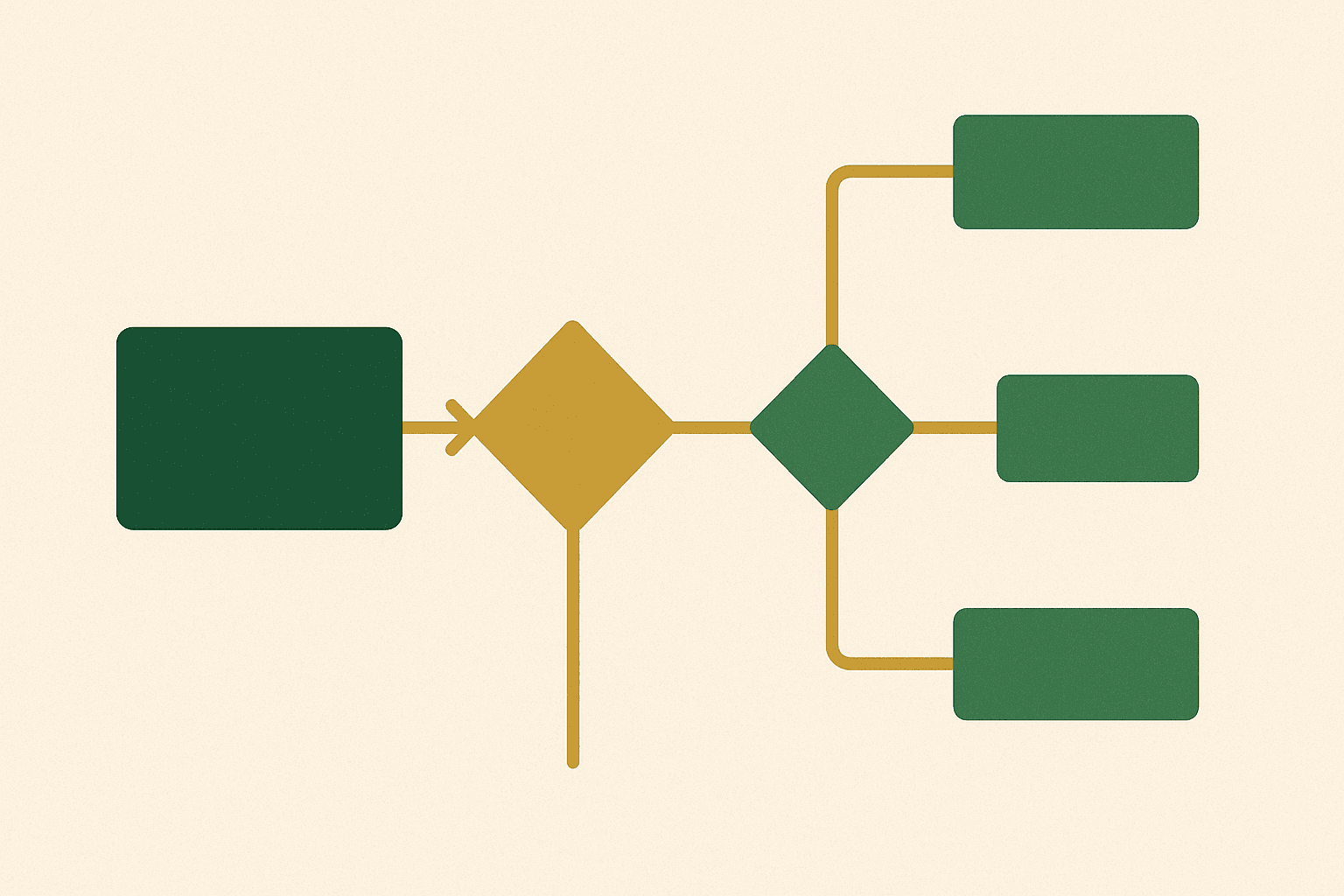
Here is the recommended architecture for an advanced abandoned cart flow in Klaviyo:
Trigger
Metric: Started Checkout (not Added to Cart). The Started Checkout trigger captures customers who entered the checkout process, which indicates higher purchase intent than simply adding items to cart.
Flow filters
- Has not placed an order since starting this flow
- Has not started checkout since starting this flow
- Has not been in this flow in the last 7 days
Step-by-step flow
- Wait 1 hour — Many customers complete checkout within 30 minutes; waiting an hour avoids emailing people mid-purchase
- Conditional split — New customer vs returning customer
- Email 1 — Reminder email (different content per split)
- Wait 24 hours
- Conditional split — Cart value above/below £100
- Email 2 — Social proof email (different angles per cart value)
- Wait 24 hours
- Conditional split — Opened previous emails yes/no
- Email 3 — Incentive email (only for high-value carts from non-openers, no discount for openers)
- Optional: SMS message for SMS-opted-in contacts who have not converted
Conditional splits that matter
Not every conditional split adds value. Focus on splits that meaningfully change your messaging strategy:
New vs returning customers
First-time customers need trust signals — reviews, guarantees, brand credibility. Returning customers already trust you; they need a reminder about the specific products in their cart and perhaps product recommendations based on their purchase history.
Cart value segments
A £500 cart deserves more attention than a £15 cart. For high-value carts, consider more aggressive recovery tactics: faster follow-ups, phone outreach, or personalised discount codes. For low-value carts, keep it simple — a reminder and product image are usually sufficient.
Product category
Different products benefit from different recovery messaging. Fashion items respond well to scarcity (only 3 left in your size). Electronics benefit from feature comparisons and reviews. Consumables benefit from subscription offers.
For more on cart recovery, see our abandoned cart email sequences guide.
Dynamic discounting strategy
Discounts in abandoned cart flows are a double-edged sword. They recover carts in the short term but can train customers to abandon on purpose to receive the discount. Here is a strategic approach:
Rules for discounting
- Never discount in the first email. Many customers will return without any incentive.
- Reserve discounts for the third or fourth email. By this point, the customer has demonstrated genuine hesitation.
- Only discount for first-time customers. Returning customers know your products and pricing; discounting is less likely to be the deciding factor.
- Only discount for carts above a minimum value. A 10 per cent discount on a £15 cart (£1.50 off) is not meaningful. A 10 per cent discount on a £200 cart (£20 off) might tip the decision.
- Use unique, single-use codes. Prevent code sharing and track which carts were recovered with a discount vs without.
Adding SMS to cart recovery
SMS has a 98 per cent open rate and generates immediate attention. Adding an SMS step to your abandoned cart flow can recover carts that email alone cannot reach.
SMS placement
Add the SMS step after the second email, roughly 48 hours after abandonment. By this point, email has had two chances to recover the cart. SMS serves as a different channel that may catch the customer at a different time or in a different context.
SMS content
Keep it short and direct. Include the customer's name, a brief mention of their cart, and a link to complete checkout. Do not include a discount in the SMS unless the email flow has already offered one.
Optimising timing and delays
| Step | Timing | Purpose |
|---|---|---|
| Email 1 | 1 hour after abandonment | Quick reminder whilst product is top of mind |
| Email 2 | 24 hours after Email 1 | Different angle (social proof, urgency) |
| SMS | 12 hours after Email 2 | Different channel, different context |
| Email 3 | 24 hours after Email 2 | Final push, optional incentive |
These timings are starting points. Use Klaviyo's A/B testing to find the optimal delays for your specific audience. Some brands find that a 30-minute first email works better; others find that 2 to 4 hours is optimal.
Email content strategy per step
Email 1: The reminder
Subject: Still thinking about it? Content: product image, name, price, checkout button. Tone: casual, helpful. No discount. No pressure. Just a friendly nudge that the items are still in their cart.
Email 2: Social proof
Subject: Here is why others love [Product]. Content: product image, customer reviews, star ratings, best-seller badges. Tone: reassuring. This email overcomes hesitation by showing that other customers are happy with the product.
Email 3: The incentive (conditional)
Subject: Your cart is waiting + a little something. Content: cart contents, unique discount code (if qualifying), urgency element (stock limited, offer expires). Tone: generous but time-limited. Only sent to carts that qualify for discounting based on your rules.
Measuring true performance
Measure your abandoned cart flow's performance correctly by tracking placed order rate (the percentage of flow entrants who ultimately purchase), revenue per recipient, recovery rate by email step (how much each email contributes to total recovery), and the discount rate (what percentage of recovered carts used a discount code).
The discount rate is particularly important. If 80 per cent of your recovered carts use the discount, your flow is training customers to expect discounts. Aim for the majority of recoveries to happen on the first two non-discounted emails.
An advanced abandoned cart flow is one of the highest-ROI investments in ecommerce email marketing. The conditional logic ensures every customer gets the right message, the multi-step approach captures customers at different decision stages, and strategic discounting protects your margins.
If you want help building or optimising your abandoned cart flow, get in touch. We build advanced Klaviyo flows through our Klaviyo email marketing services that consistently outperform basic setups.