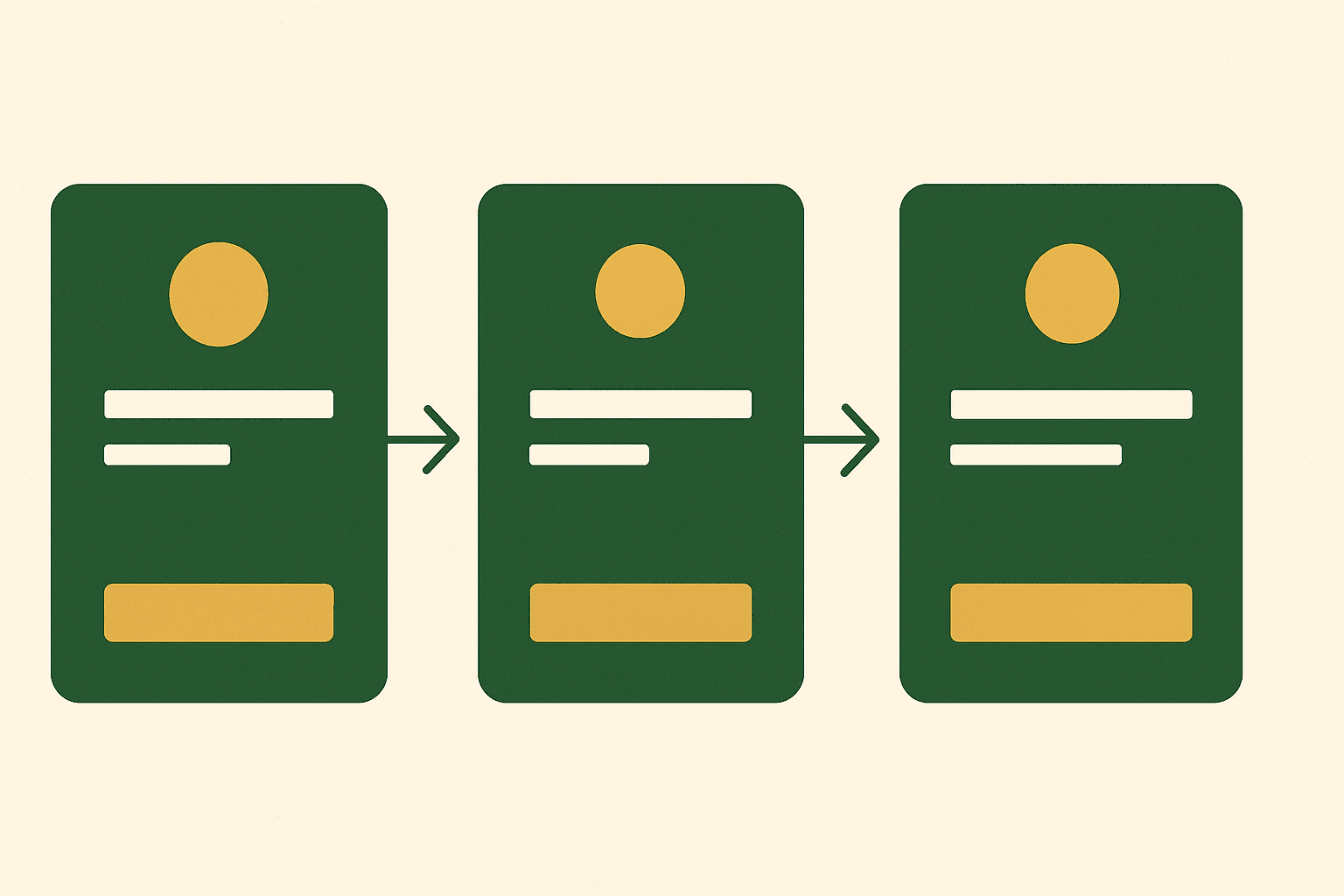
The checkout is where revenue is won or lost. Every Shopify store shares the same fundamental checkout architecture, but Shopify Plus unlocks customisation capabilities that can meaningfully impact conversion rate, average order value, and customer experience. This guide covers every aspect of Shopify Plus checkout customisation — from branding basics to advanced Shopify Functions — so you can make informed decisions about where to invest.
If you are on standard Shopify, this guide will also help you understand what Plus unlocks and whether the upgrade is justified for your business. For a broader view of the Plus proposition, see our guide to enterprise ecommerce on Shopify.
Why checkout customisation matters
Shopify's default checkout is already one of the highest-converting checkouts in ecommerce. It is fast, secure, trusted, and optimised through billions of transactions worth of data. So why customise it?
Because "good enough for everyone" is not the same as "optimised for your business." The default checkout does not know your customers, your products, or your commercial priorities. It does not know that your customers frequently buy complementary products together. It does not know that a trust badge specific to your industry would reduce abandonment. It does not know that your B2B customers need a PO number field.
The customisations available on Shopify Plus let you tailor the checkout to your specific context, and the commercial impact can be substantial:
- Checkout upsells can increase AOV by 5–15% on relevant product recommendations.
- Custom validation can reduce failed deliveries and customer service contacts.
- Brand-consistent design can reduce checkout abandonment by reinforcing trust.
- Shipping customisation can surface the right delivery options and reduce confusion.
On a store doing £1M annually, a 2% checkout conversion improvement translates to £20,000 in additional revenue. That alone typically justifies the investment in checkout customisation.

What you can actually customise
Shopify Plus checkout customisation falls into four categories:
1. Branding and design
Colours, fonts, logo, background images, button styles, and layout options. Available through the Shopify admin without any code.
2. UI extensions
Custom visual components added to the checkout: upsell widgets, trust badges, custom form fields, banners, gift message inputs, and more. These require development using Shopify's checkout UI extension APIs.
3. Shopify Functions
Backend logic that modifies checkout behaviour: custom discount rules, shipping rate manipulation, payment method filtering, and cart validation. These run server-side within Shopify's infrastructure.
4. Post-purchase extensions
Custom experiences shown after payment but before the thank-you page. Typically used for one-click upsells, surveys, or cross-sell offers.
Checkout extensibility explained
Checkout extensibility is Shopify's modern framework for checkout customisation, replacing the deprecated checkout.liquid approach. Understanding this framework is essential for anyone planning checkout modifications.
The shift from checkout.liquid
Previously, Shopify Plus merchants could edit checkout.liquid directly, giving them full control over the checkout HTML. This was powerful but problematic: custom checkout code could break when Shopify updated the checkout, security vulnerabilities could be introduced, and performance was difficult to guarantee.
Checkout extensibility takes a different approach. Instead of editing the checkout template directly, you build modular components that Shopify renders within its managed checkout. This means:
- Your customisations survive Shopify platform updates automatically.
- Security is maintained because you cannot inject arbitrary code.
- Performance is guaranteed because components run in Shopify's optimised environment.
- You can arrange components using the checkout editor without touching code.
The checkout editor
Similar to the theme editor, the checkout editor lets you add, remove, and reposition checkout components through a drag-and-drop interface. This means non-technical team members can make changes to the checkout layout without developer involvement — a significant operational advantage.

Checkout UI extensions
Checkout UI extensions are visual components that render within the checkout. They are built using React (via Shopify's UI extensions API) and can be placed at specific "targets" within the checkout flow.
Available extension targets
Extension targets define where your component can appear in the checkout:
- Before/after line items: Show product recommendations, upsell offers, or product-level messaging.
- Before/after shipping options: Add delivery date selectors, shipping notes, or custom delivery instructions.
- Before/after payment methods: Display trust badges, security messaging, or payment-specific instructions.
- Order summary: Add custom messaging, discount information, or loyalty points display.
- Header/footer: Brand messaging, support contact information, or promotional banners.
Common UI extension use cases
Checkout upsells
Product recommendations shown within the checkout based on cart contents. These typically achieve 3–8% acceptance rates. The key is showing highly relevant products at accessible price points — a £5 add-on converts better than a £50 suggestion.
Custom form fields
PO numbers for B2B customers, delivery date selectors, gift message inputs, or special instruction fields. These capture information that the default checkout does not collect, reducing post-purchase customer service contacts.
Trust and urgency elements
Security badges, guaranteed delivery dates, stock urgency indicators, or social proof messaging. These address common checkout hesitation points and can reduce abandonment.
Loyalty integration
Display loyalty points balance, allow point redemption at checkout, or show points-to-be-earned on the current order. This reinforces your loyalty programme at the moment of purchase.
// Example: Checkout UI Extension structure
import {
  reactExtension,
  Banner,
  BlockStack,
  Text,
  useCartLines,
} from "@shopify/ui-extensions-react/checkout";

export default reactExtension(
  "purchase.checkout.block.render",
  () => <TrustBadge />
);

function TrustBadge() {
  const cartLines = useCartLines();
  const itemCount = cartLines.length;

  return (
    <Banner status="info">
      <BlockStack>
        <Text>Free UK delivery on all orders</Text>
        <Text>30-day hassle-free returns</Text>
      </BlockStack>
    </Banner>
  );
}
Shopify Functions for checkout logic
While UI extensions handle the visual side, Shopify Functions handle the logic. They run server-side within Shopify's infrastructure and can modify how discounts, shipping, and payments work at checkout.
Discount Functions
Create discount logic that goes beyond Shopify's built-in discount rules:
- Tiered discounts: "Buy 3, get 10% off; buy 5, get 20% off" with automatic application.
- Product combination discounts: "Buy product A and product B together, get 15% off both."
- Customer-specific discounts: Different discount rates based on customer tags or purchase history.
- Time-limited flash pricing: Automatic discount application during specific time windows.
Shipping Functions
Customise which shipping options appear and how they are presented:
- Hide options: Remove shipping methods based on cart weight, value, or destination.
- Rename options: Replace carrier API names with customer-friendly labels.
- Reorder options: Present shipping methods in your preferred order.
- Add surcharges: Apply handling fees for oversized items or remote postcodes.
Payment Functions
Control which payment methods are available based on order context:
- Hide payment methods: Remove COD for new customers or BNPL for high-value orders.
- Reorder payment methods: Prioritise your preferred payment method (e.g., Shopify Payments).
- Conditional display: Show invoice payment only for B2B customers with approved terms.

Checkout branding and design
The most accessible level of checkout customisation is branding. On Shopify Plus, you can customise:
- Colours: Primary, secondary, and accent colours for buttons, links, and backgrounds.
- Typography: Custom fonts for headings and body text, matching your storefront.
- Logo: Your brand logo displayed prominently in the checkout header.
- Background: Custom background colours or images for the checkout page.
- Buttons: Corner radius, padding, and hover states for checkout buttons.
- Form fields: Border styles, backgrounds, and focus states for input fields.
While branding changes seem cosmetic, they directly impact trust and conversion. A checkout that visually matches your storefront reassures customers that they are still on your site. A checkout that looks different from the rest of the shopping experience triggers doubt, especially on mobile where visual continuity is even more important.
Post-purchase and checkout upsells
Post-purchase upsells appear after the customer has completed payment but before the thank-you page. This is a uniquely valuable placement because the customer has already committed to buying — the purchase anxiety is gone — and adding another item requires just one click, with no re-entry of payment details.
Post-purchase upsell best practices
- One offer only: Do not show multiple upsells. Decision fatigue reduces acceptance rates. Show one highly relevant product.
- Complementary products: The upsell should complement the purchase, not compete with it.
- Discounted price: Offering a post-purchase exclusive discount (10–15% off) significantly increases acceptance rates.
- Clear time limit: "This offer is available for the next 5 minutes" creates urgency without being deceptive.
- Easy decline: The "No thanks" option should be clearly visible. Aggressive dark patterns damage brand trust and increase refund rates.
Combined with in-cart upsells from a smart cart solution, post-purchase offers create a comprehensive upsell funnel that captures revenue opportunities at every stage of the purchase journey.
Cart and checkout validation
Validation rules prevent orders that would cause operational problems downstream. Rather than dealing with issues after the order is placed, validation catches them at checkout:
Common validation rules
- Minimum order values: Prevent checkout if the cart total is below a specified threshold.
- Product restrictions: Block certain product combinations (e.g., items that cannot ship together).
- Address validation: Verify delivery addresses against postal databases to reduce failed deliveries.
- Quantity limits: Cap maximum quantities per product to prevent stock hoarding.
- Geographic restrictions: Block checkout for postcodes or countries you cannot deliver to.
For custom theme builds, as covered in our guide to custom Shopify theme development, validation logic can be integrated at both the cart level and the checkout level for comprehensive order integrity.
Checkout conversion optimisation
Beyond adding features, checkout optimisation involves removing friction. Here are the highest-impact optimisations we implement for Shopify Plus stores:
1. Reduce form fields
Every form field is a potential drop-off point. Use Shopify's address autocomplete, pre-fill returning customer data through Shop Pay, and remove any fields that are not strictly necessary for order fulfilment.
2. Optimise for mobile
Over 70% of checkout sessions on most DTC stores happen on mobile. Ensure buttons are thumb-friendly, form fields are appropriately sized, and the checkout does not require horizontal scrolling. Test on actual devices, not just browser emulators.
3. Display trust signals
Security badges, return policy reminders, and customer service contact information address the anxiety that peaks at checkout. Place these where they are visible without scrolling, particularly near the payment section.
4. Simplify shipping options
Too many shipping options create decision paralysis. Use Shopify Functions to hide irrelevant options and rename the remaining ones with clear delivery date expectations: "Standard (3–5 working days)" rather than "Royal Mail Tracked 48".
5. Enable accelerated checkout
Shop Pay, Apple Pay, and Google Pay reduce checkout to a single step for returning customers. These accelerated methods consistently show higher conversion rates because they eliminate form filling entirely. Ensure they are prominently displayed.

Implementation approach
Checkout customisation should be approached methodically. Here is the process we follow for every Shopify Plus checkout project:
Phase 1: Audit and analysis (1 week)
Review current checkout performance metrics: conversion rate by step, abandonment points, device-specific data, and payment method usage. Identify the specific friction points and revenue opportunities.
Phase 2: Strategy and specification (1 week)
Define the customisations that will have the highest impact based on the audit findings. Prioritise based on expected revenue impact and development effort. Create detailed specifications for each customisation.
Phase 3: Development (2–4 weeks)
Build the UI extensions and Shopify Functions in a development store. Test thoroughly against edge cases: empty carts, maximum quantity orders, guest vs logged-in customers, mobile vs desktop.
Phase 4: Testing and launch (1 week)
Deploy to the live store with monitoring in place. Compare performance against the pre-customisation baseline over a statistically significant period (typically 2–4 weeks and 500+ transactions).
Phase 5: Iteration (ongoing)
Checkout optimisation is continuous. Test upsell product selection, adjust copy, refine validation rules, and monitor conversion metrics. The best results come from ongoing attention, not a single deployment.
The best checkout customisation is invisible to the customer. It removes friction they did not know they had and adds value they did not know they wanted. The checkout that converts best is the one that feels effortless.
Shopify Plus checkout customisation is one of the most commercially valuable investments a growing ecommerce brand can make. The checkout is where purchase intent meets commitment, and every improvement — however small — compounds across every transaction.
The key is knowing where to focus. Not every customisation makes sense for every store. A post-purchase upsell is transformative for a beauty brand with a deep product catalogue but irrelevant for a single-product store. Trust badges matter more for new brands than established ones. B2B checkout fields are essential for wholesale but unnecessary for DTC.
Start with the audit. Understand where your checkout is losing customers, then invest in the customisations that address those specific problems. If you need help identifying the opportunities and implementing the solutions, our Shopify development team specialises in exactly this work. Get in touch for an honest assessment of your checkout's potential.