
Every few months, we speak with a brand that has done a "CRO project." They hired someone — an agency, a freelancer, a consultant — who audited their store, produced a report with recommendations, and implemented a round of changes. The conversion rate improved for a few weeks. Then it plateaued. Then it started drifting back toward where it was before.
The brand is puzzled. They spent good money on CRO. It worked for a while. Why did it stop?
The answer is straightforward: conversion rate optimisation is not a project. It is a process. Treating it as a one-off engagement is like treating fitness as a single gym session. You will see some immediate benefit, but without sustained effort, you will be back where you started within months.
The one-off CRO myth
The one-off CRO model typically looks like this: an audit identifies 20-30 issues, the most impactful are fixed in a sprint of development work, and the store's conversion rate improves. Everyone celebrates. The project is "done."
The problem is that the conditions that created those conversion issues have not changed. Your customers' expectations continue to evolve. Your competitors continue to improve their stores. Your product catalogue changes. Seasonal patterns shift. New traffic sources bring different types of visitors with different behaviours.
A one-off CRO project addresses the symptoms visible at a specific point in time. It does not build the capability to identify and address new issues as they emerge. It is a snapshot, not a system.
One-off CRO is like cleaning your house once and expecting it to stay clean. The value is real but temporary. Sustainable results require sustainable effort.
Why the gains fade
Several factors cause one-off CRO gains to erode over time:
- Customer behaviour changes. What converts in March may not convert in September. Seasonal patterns, cultural shifts, and evolving expectations mean that static solutions degrade.
- New content and products. As you add products, collections, and content, new conversion friction points emerge. A product page template that works for 50 products may fail when applied to 500.
- Platform and browser updates. Shopify releases updates, browsers change rendering behaviour, and new devices enter the market. What rendered perfectly six months ago may have subtle issues today.
- Competitor improvement. If your competitors are continuously optimising and you are not, your relative position deteriorates even if your absolute performance stays flat.
- App changes. Third-party apps update their code, change their UI, or alter their performance profile. These changes can introduce new friction without any deliberate action on your part.
Why continuous CRO works
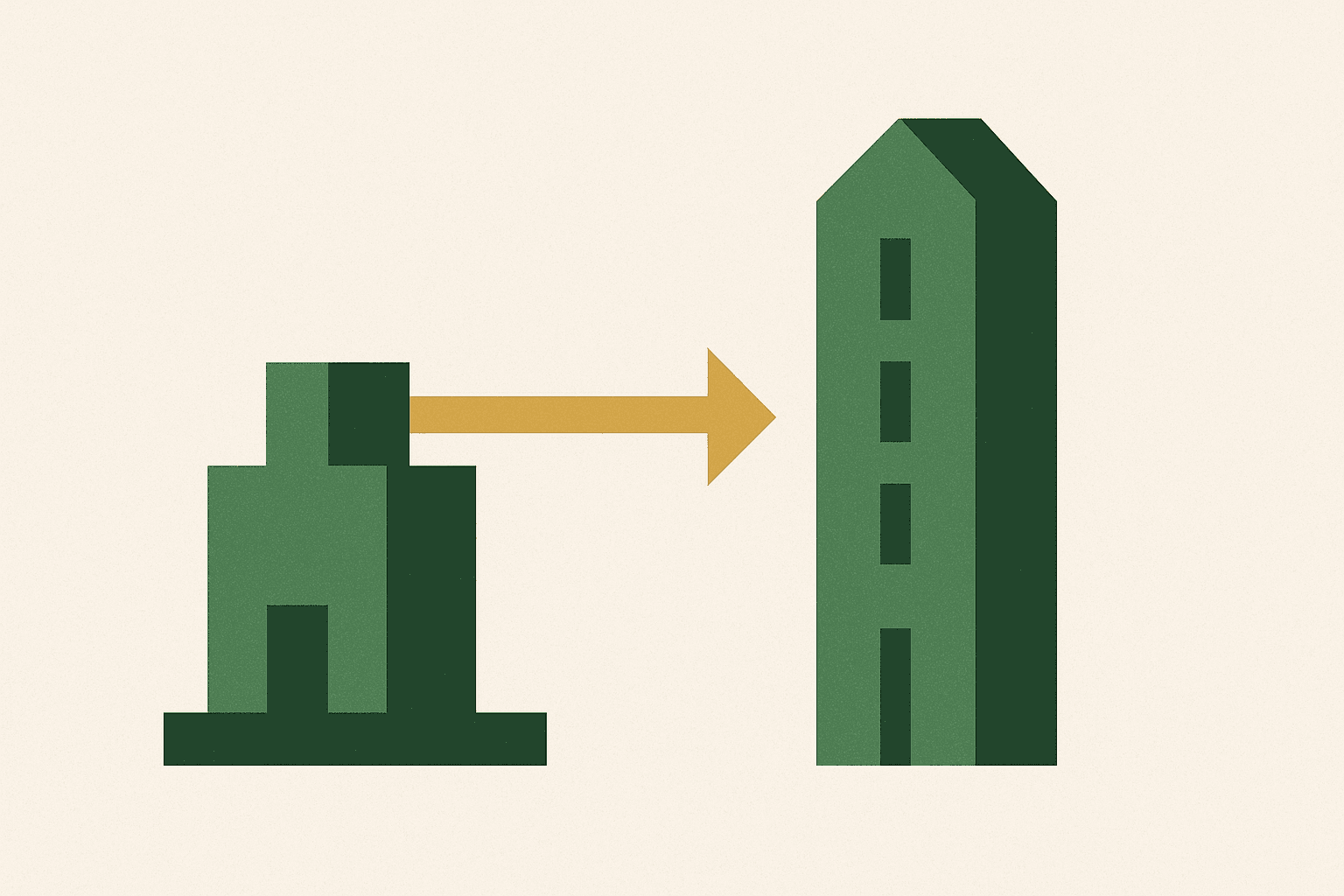
Continuous CRO — a structured, ongoing programme of research, testing, and implementation — works because it addresses the fundamental reality that your store is a living system, not a static artefact.
It builds institutional knowledge
Every test you run generates data about your specific customers. Over time, this accumulates into a rich understanding of what works for your audience, your products, and your market. This knowledge is unique to your business and cannot be replicated by applying generic best practices.
A one-off audit applies general principles. Ongoing testing discovers specific truths about your customers that no audit could reveal.
It catches problems early
When you are continuously monitoring conversion metrics, you spot drops quickly. A new app update that breaks the mobile cart? You will see it in the data within days, not months. A seasonal shift that changes purchase behaviour? You will adapt before it costs you significant revenue.
Without ongoing monitoring, conversion problems compound silently. By the time someone notices, the cumulative revenue impact can be substantial.
It creates a competitive moat
Continuous optimisation is hard to replicate. A competitor can copy your store's design. They cannot copy the hundreds of micro-insights you have gathered through months of testing. The knowledge you build through ongoing CRO becomes a genuine competitive advantage — one that deepens with every test cycle.
The compounding effect of incremental gains
The power of ongoing CRO lies in compounding. A single test that improves conversion rate by 3% is nice. Twelve tests over a year, each improving a different aspect by 2-5%, compound into a transformative result.
Here is the maths for a store doing £50,000 per month in revenue:
| Scenario | Improvement | Annual revenue impact |
|---|---|---|
| One-off 5% CR improvement | 5% (then stable) | +£30,000 |
| Monthly 1% improvements (compounding) | ~12.7% cumulative | +£76,200 |
| Monthly 2% improvements (compounding) | ~26.8% cumulative | +£161,000 |
The compounding effect is why brands that invest in ongoing CRO consistently outperform those that treat it as a project. The gap widens every month. After two years, it is often the difference between a store doing well and a store dominating its category.
This is why we build CRO into our ongoing Shopify development and web design retainers. It is not a separate service — it is a fundamental part of how we approach ecommerce.
Building a testing framework
Ongoing CRO requires structure. Without a framework, testing becomes random — you test whatever someone suggests, with no prioritisation and no systematic learning. Here is the framework we use:
The research-hypothesise-test-learn cycle
Research: Start with data. What does your analytics tell you about where shoppers drop off? What do heatmaps reveal about engagement patterns? What does session replay show about friction points? What are your customers telling you in reviews and support tickets?
Hypothesise: Based on the research, form specific, testable hypotheses. Not "the product page needs work" but "Moving the size guide above the add-to-cart button will reduce size-related returns and increase conversion rate for first-time buyers by reducing purchase hesitation."
Test: Design and implement the test. For stores with sufficient traffic, this means a proper A/B test with statistical rigour. For lower-traffic stores, it may mean implementing the change and comparing performance periods.
Learn: Analyse the results. Did the hypothesis hold? Why or why not? What does this tell you about your customers? Document the learning — this is where institutional knowledge builds.
Prioritisation: the ICE framework
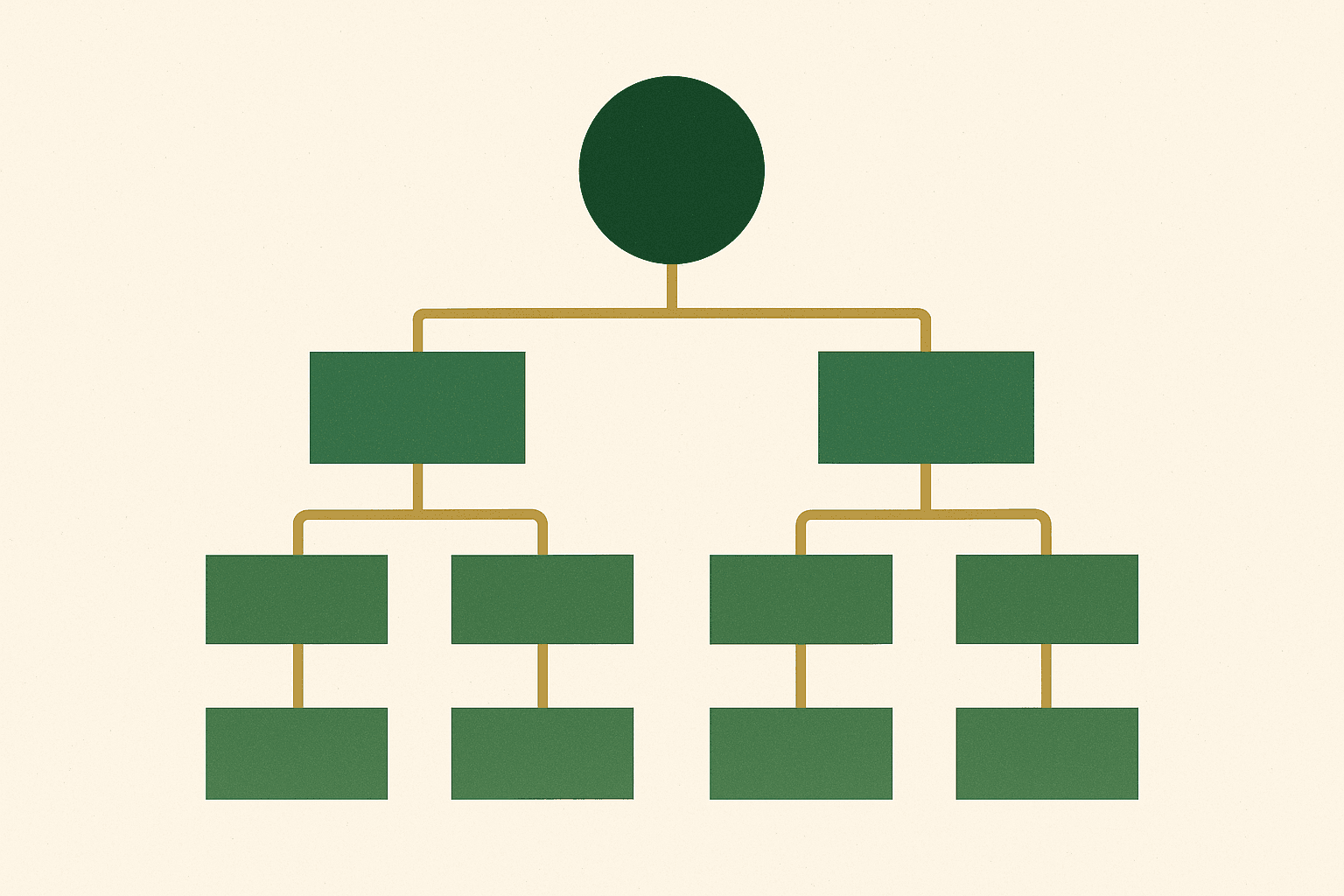
Not all tests are created equal. Use the ICE framework to prioritise:
- Impact: How much potential does this change have to move the needle? A change on a page that gets 50,000 visits per month has more impact potential than one on a page that gets 500.
- Confidence: How confident are you that this change will work? Changes backed by strong data and user research warrant higher confidence than gut-feel ideas.
- Ease: How easy is this to implement and test? A copy change takes an hour. A checkout flow redesign takes weeks.
Score each proposed test on a 1-10 scale for each dimension, then average the scores. Run the highest-scoring tests first.
Test documentation
Every test should be documented with: the hypothesis, what was changed, the duration, sample size, results, statistical significance, and the learning. This documentation is the foundation of your CRO knowledge base — it prevents repeating failed tests and helps new team members understand what has already been tried.
What to test (and in what order)
For ecommerce stores on Shopify, these are the highest-impact areas to test, roughly in priority order:
1. Product pages
Product pages are where purchase decisions are made. Test:
- Image gallery layout and order
- Add-to-cart button placement, colour, and copy
- Social proof placement (reviews, ratings, purchase count)
- Product description format (paragraphs vs. bullet points, above vs. below the fold)
- Trust signals (shipping info, returns policy, payment badges)
- Urgency and scarcity elements (if genuine — never fake these)
2. Cart and checkout
Cart abandonment is the largest single source of lost revenue in ecommerce. Test:
- Cart drawer vs. dedicated cart page
- Upsell and cross-sell placement and messaging
- Shipping threshold messaging
- Checkout step reduction
- Express checkout visibility (Shop Pay, Apple Pay, Google Pay)
3. Collection pages
Collection pages determine whether shoppers find what they are looking for. Test:
- Products per row (3 vs. 4 vs. 5)
- Product card information (price, rating, colour options)
- Filter visibility and layout
- Sort order defaults
- Pagination vs. infinite scroll vs. load-more
For more on optimising collection page filters, see our complete guide to Shopify product filters.
4. Navigation and site search
How shoppers find products affects whether they find them at all. Test:
- Menu structure and category naming
- Search bar prominence and autocomplete behaviour
- Mega menu vs. simple dropdown
- Mobile navigation patterns
5. Email and retention
CRO extends beyond the website. Your email marketing flows are conversion mechanisms too. Test:
- Abandoned cart email timing and sequence length
- Welcome flow offer structure
- Post-purchase cross-sell recommendations
- Subject line strategies across different flow types
CRO for low-traffic stores
A common objection to ongoing CRO is "We do not have enough traffic to test." This is partially valid — statistical A/B testing requires meaningful sample sizes — but it does not mean low-traffic stores cannot do CRO.
Qualitative over quantitative
For stores with under 10,000 monthly sessions, qualitative research methods are more appropriate than A/B testing:
- Session recordings: Watch real shoppers interact with your store. You will see friction points that analytics cannot reveal — hesitation, confusion, rage-clicking on non-clickable elements.
- Heatmaps: Understand where attention concentrates and where it drops off. Elements below the "attention fold" need to earn their position.
- User testing: Ask 5-10 people to complete specific tasks on your store. The patterns that emerge from even a small sample are remarkably consistent and actionable.
- Customer interviews: Talk to recent customers about their purchase experience. What nearly stopped them from buying? What would have made the experience better?
Best-practice implementation
Some changes are well-established enough that they do not need testing for your specific store. If your product pages lack reviews, adding them will improve conversion. If your mobile checkout requires unnecessary form fields, removing them will help. These are not hypotheses — they are established patterns with extensive evidence behind them.
Implement best practices first. Save testing for the nuanced decisions where the best approach is genuinely uncertain.
Measuring CRO success properly
Conversion rate is the headline metric, but it is not the only metric — and sometimes it is not even the most important one.
Revenue per session
Revenue per session (total revenue divided by total sessions) is often a better north star metric than conversion rate alone. A change that increases conversion rate but decreases average order value may actually reduce revenue. Revenue per session captures both effects.
Segment-level analysis
Overall conversion rate can mask important segment-level differences. A test might improve conversion for new visitors but harm it for returning customers. Or improve desktop conversion while hurting mobile. Always analyse test results by key segments: device type, traffic source, new vs. returning, and geographic region.
Statistical significance
Do not call a test "done" until it reaches 95% statistical significance. Running tests for too short a period, or stopping them when results look favourable, leads to false positives — changes you think worked but actually made no difference (or even made things worse). Most tests need at least 1,000 conversions per variation to reach reliable conclusions.

Common CRO mistakes
Mistake 1: Testing too many things at once
If you change the headline, the hero image, the button colour, and the layout simultaneously, you will not know which change drove the result. Isolate variables. Test one hypothesis at a time unless you are running a properly structured multivariate test with sufficient traffic.
Mistake 2: Copying competitors
Just because a competitor uses a particular layout or copy approach does not mean it works for them — and even if it does, it may not work for you. Your customers are not their customers. Your products are not their products. Test ideas, do not copy implementations.
Mistake 3: Ignoring losing tests
A test that produces a negative or neutral result is not a failure. It is valuable information about your customers. Document what you learned and use it to inform future hypotheses. The best CRO programmes learn as much from losing tests as from winning ones.
Mistake 4: Optimising for vanity metrics
Increasing time on page, reducing bounce rate, or improving click-through rate on a specific element are only valuable if they correlate with revenue. Always connect CRO efforts back to commercial outcomes. A test that reduces bounce rate but does not improve conversion or revenue is not a win — it is just noise.
Mistake 5: Neglecting mobile
If 65% of your traffic is mobile but you only test on desktop, you are optimising for the minority. Always design and evaluate tests with mobile as the primary context. A change that looks great on a 27-inch monitor may be invisible or counterproductive on a mobile screen. This connects directly to your broader SEO and performance strategy.
Building a culture of testing
The most effective CRO programmes are not run by a single person or agency. They are embedded in the culture of the organisation. Everyone — from marketing to customer service to product development — contributes hypotheses based on what they see in their daily work.
Make testing accessible
Share test results across the team. Celebrate learning, not just wins. When a test loses, discuss what it teaches about your customers. When a test wins, explain why the hypothesis was correct and what it means for future decisions.
Create a hypothesis pipeline
Maintain a backlog of test ideas sourced from across the business. Customer service hears objections that marketing never sees. Product development understands feature requests. Operations sees fulfilment patterns. All of these perspectives generate CRO hypotheses.
Report on outcomes, not activities
Do not measure CRO success by the number of tests run. Measure it by cumulative revenue impact. A programme that runs 5 well-researched tests per quarter and generates measurable revenue improvement is far more valuable than one that runs 20 random tests and learns nothing.

CRO is not something you do once and move on from. It is a fundamental business capability that compounds over time. Every test you run, every insight you gather, every improvement you make builds on the ones before it. The brands that understand this — and invest accordingly — are the ones that consistently outperform their category.
If you are ready to move from one-off fixes to a systematic approach to conversion optimisation, start a conversation with us. We build CRO into every engagement because we know it is where the real, sustainable gains come from.