Every ecommerce purchase is the result of a journey. A customer discovers your brand, evaluates your products, decides to buy, experiences the delivery and product, and then decides whether to return. At every stage, there are touchpoints that either move the customer forward or cause them to drop off.
Customer journey mapping is the practice of documenting these touchpoints systematically, identifying where customers are getting stuck or leaving, and optimising each stage to reduce friction and improve conversion. It sounds straightforward, but most ecommerce brands either do not do it at all or do it superficially — creating a nice-looking diagram that sits in a folder and never drives action.
An effective journey map is a living document built on data, refined through observation, and used to prioritise improvements. This guide covers how to build one that actually changes your business.
Why journey mapping matters for ecommerce
Journey mapping matters because most conversion problems are journey problems. A brand might have excellent products, competitive pricing, and a visually attractive site, but still underperform on conversion because the journey has friction points that are not visible from the inside.
Common journey problems that journey mapping reveals:
- Navigation confusion. Customers cannot find what they are looking for because the site structure does not match how they think about your products.
- Trust gaps. Customers reach the product page but leave because they do not have enough information or social proof to feel confident about purchasing.
- Checkout friction. Customers add to cart but abandon during checkout because the process is too long, requires account creation, or does not offer their preferred payment method.
- Post-purchase silence. Customers complete a purchase but never return because the post-purchase experience is underwhelming — no delivery updates, no follow-up communication, no reason to come back.
Each of these problems exists at a specific stage of the journey, and each requires a different intervention. Without a journey map, you are guessing about where to focus your optimisation efforts. With one, you are making data-informed decisions about the highest-impact improvements.
The five stages of the ecommerce journey
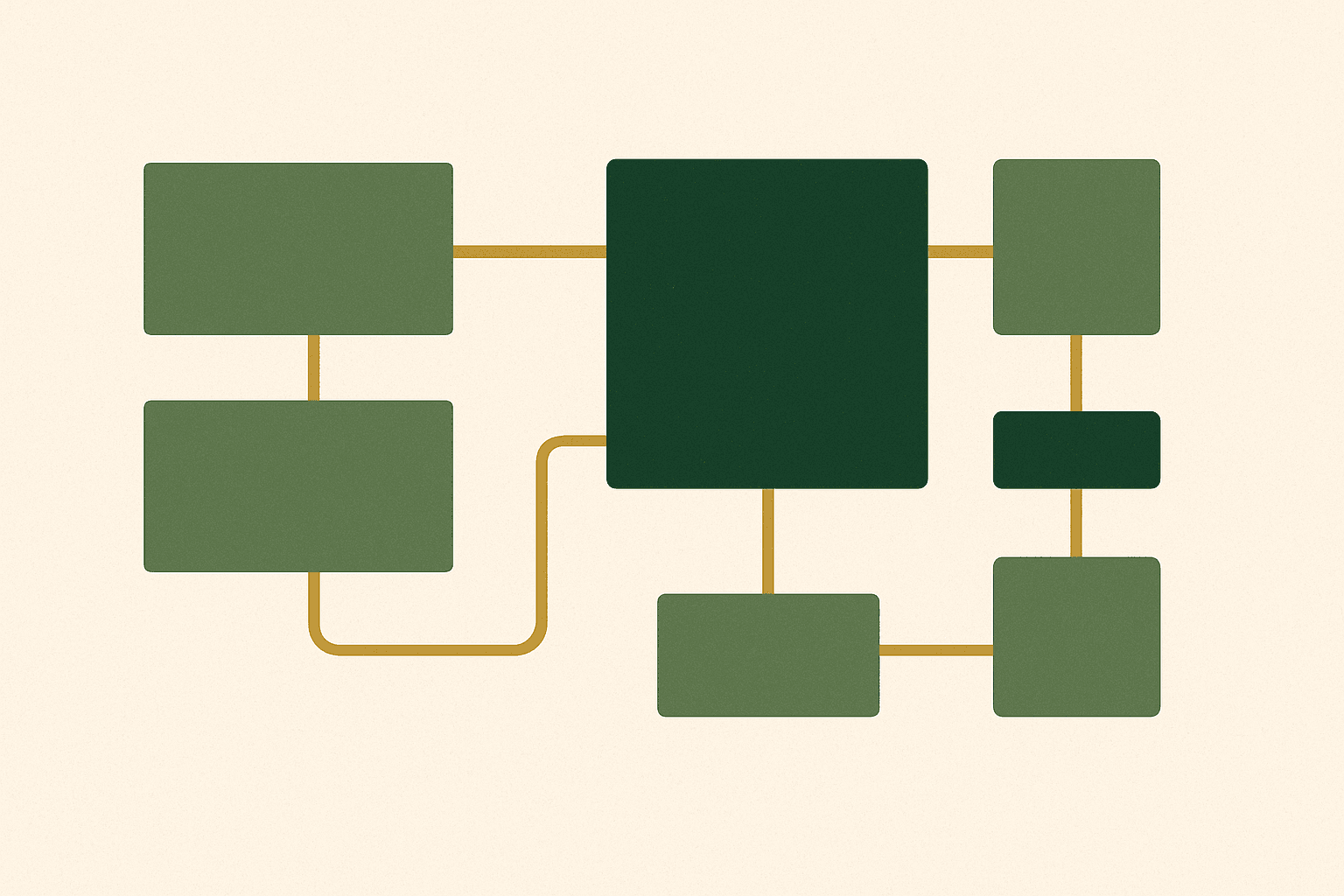
Every ecommerce journey can be broken into five stages:
- Awareness. The customer becomes aware of your brand or product. Touchpoints include social media, search results, advertising, PR coverage, and word-of-mouth referrals.
- Consideration. The customer evaluates your offering against alternatives. Touchpoints include your website, product pages, reviews, comparison content, and email marketing.
- Purchase. The customer decides to buy. Touchpoints include add-to-cart, checkout, payment processing, and order confirmation.
- Delivery and experience. The customer receives and uses the product. Touchpoints include shipping notifications, delivery experience, packaging, product quality, and unboxing.
- Loyalty and advocacy. The customer decides whether to return and recommend. Touchpoints include post-purchase emails, review requests, loyalty programmes, and referral mechanisms.
Each stage has different customer needs, emotions, and decision factors. Mapping these helps you understand what the customer is thinking and feeling at each point, and what information or experience they need to move to the next stage.
Mapping touchpoints at each stage
For each journey stage, document every touchpoint where the customer interacts with your brand. Be comprehensive — include touchpoints you control (your website, emails, packaging) and those you do not (reviews on third-party sites, social media mentions, competitor comparisons).
For each touchpoint, document:
- The channel. Where does this interaction happen? Your website, email, social media, physical mail, a third-party site?
- The customer's goal. What is the customer trying to accomplish at this point? Finding information? Comparing options? Completing a purchase?
- The customer's emotion. How is the customer likely feeling? Curious? Anxious? Excited? Frustrated? Understanding emotional states helps you design appropriate responses.
- Potential friction. What could go wrong? What might prevent the customer from achieving their goal or moving to the next stage?
- Your performance. How well does this touchpoint perform currently? Use quantitative data where available (page bounce rate, email open rate, checkout completion rate) and qualitative data where not (customer feedback, session recordings).
As we covered in our CRO guide, the most impactful improvements often come from addressing friction at specific touchpoints rather than redesigning entire experiences.
Identifying drop-off points
The most valuable output of journey mapping is identifying where customers drop off — where they exit the journey without completing the desired action for that stage.
Key drop-off points to analyse:
- Landing page to product page. If visitors are landing on your site but not browsing products, the issue is likely navigation, content relevance, or page load speed.
- Product page to cart. If customers view products but do not add to cart, the issue may be pricing, product information quality, imagery, or lack of social proof.
- Cart to checkout completion. Cart abandonment is one of the most studied ecommerce metrics. Common causes include unexpected shipping costs, required account creation, limited payment options, and complex checkout forms.
- First purchase to second purchase. If customers buy once but never return, the post-purchase experience needs improvement. As we discuss in our analytics guide, tracking this transition is essential.
For each drop-off point, quantify the impact. If 1,000 customers visit your product pages daily and only 30 add to cart, the product-page-to-cart conversion rate is 3%. If the category benchmark is 8%, that gap represents your highest-priority improvement opportunity.
Data sources for journey mapping
Effective journey mapping combines quantitative and qualitative data:
Quantitative sources:
- Google Analytics 4: traffic sources, page flows, conversion paths, and funnel analysis
- Shopify analytics: sales funnel, cart abandonment, and customer reports
- Email marketing analytics: open rates, click rates, and conversion by flow and campaign
- Heatmap and session recording tools: how customers interact with specific pages
Qualitative sources:
- Customer surveys: post-purchase feedback and NPS scores
- Customer service data: common questions, complaints, and friction points
- User testing: watching real customers navigate your site and articulate their thought process
- Reviews: what customers say about their experience on your site and third-party platforms
Building your journey map
With touchpoints documented and data collected, build your journey map:
- Choose a format. A simple spreadsheet with journey stages as columns and touchpoint details as rows works well for most brands. Visual tools like Miro or FigJam are useful for collaborative workshops but are not necessary.
- Map the current state. Document what actually happens today, not what you want to happen. Be honest about where the experience falls short.
- Layer in data. Add quantitative metrics to each touchpoint: conversion rates, bounce rates, satisfaction scores. This transforms the map from a qualitative exercise into a prioritisation tool.
- Identify opportunities. Mark the touchpoints with the largest performance gaps between current state and benchmark or target. These are your priority improvement areas.
- Create an action plan. For each priority opportunity, define a specific improvement, estimate the effort required, and assign ownership.
Optimising the awareness stage
The awareness stage is about being found by the right customers in the right context. Key optimisation areas:
- Search visibility. SEO investment ensures customers find you when searching for products or solutions in your category. Focus on product-related search terms and informational content that demonstrates expertise.
- Paid channel efficiency. Ensure your paid advertising reaches customers whose intent matches your offering. Broad targeting wastes budget on irrelevant audiences.
- Social presence. Maintain an authentic social media presence that reflects your brand values and engages your target audience.
- Referral mechanisms. Make it easy for satisfied customers to recommend you. Word-of-mouth remains the most trusted form of awareness.
Optimising the consideration stage
During consideration, customers evaluate whether your product is right for them. The critical elements:
- Product page quality. High-quality imagery, comprehensive descriptions, clear sizing information, and authentic reviews. The product page is where most purchase decisions are made or lost.
- Navigation and search. Customers need to find relevant products quickly. Poor navigation or search that returns irrelevant results sends customers to competitors.
- Social proof. Reviews, testimonials, user-generated content, and trust signals reduce the perceived risk of purchasing from a brand the customer may not have bought from before.
- Comparison information. Help customers understand how your products differ from alternatives. Do not avoid the comparison — own it.
As explored in our web design philosophy, every design decision should serve the customer's decision-making process at this stage.
Optimising the purchase stage
The purchase stage is where intent converts to action. Friction here has the most direct and measurable impact on revenue:
- Streamlined checkout. Minimise steps, pre-fill where possible, and offer guest checkout. Every additional field or step increases abandonment.
- Payment options. Offer the payment methods your customers prefer: credit cards, PayPal, Klarna, Apple Pay, Google Pay. Limited payment options cause abandonment.
- Transparent costs. Show shipping costs, taxes, and any other charges early in the process. Unexpected costs at checkout are the primary cause of cart abandonment.
- Urgency and reassurance. Stock level indicators, delivery date estimates, and return policy information provide the confidence customers need to complete their purchase.
Optimising the post-purchase stage
The post-purchase stage determines whether a customer becomes a repeat buyer. Most brands underinvest here:
- Order confirmation and tracking. Immediate order confirmation, proactive shipping updates, and delivery notifications set expectations and reduce anxiety.
- Delivery experience. Packaging quality, delivery speed, and any unboxing elements contribute to the overall impression. The physical product experience is where your brand promise is either confirmed or broken.
- Follow-up communication. Post-purchase email sequences that provide product care information, request reviews, and suggest complementary products. These flows drive repeat purchases and build loyalty.
- Easy returns. A straightforward returns process builds confidence for future purchases. Making returns difficult saves money short-term but destroys lifetime value.
Ongoing journey optimisation
Journey mapping is not a one-time project. It is an ongoing practice of observation, measurement, and improvement:
- Review quarterly. Revisit your journey map every quarter. Update metrics, reassess priorities, and document changes you have made and their impact.
- Test and measure. Every journey improvement should be tested and measured. A/B testing allows you to validate that changes actually improve performance rather than just feeling better.
- Listen continuously. Customer feedback, support tickets, and reviews provide ongoing insight into journey pain points. Build systems to capture and analyse this feedback systematically.
- Adapt to change. Customer behaviour evolves, new channels emerge, and your own improvements change the journey. Your map should evolve with them.
Customer journey mapping is one of the highest-leverage activities an ecommerce brand can undertake. It transforms vague impressions about customer experience into specific, data-driven improvement priorities. The brands that do this well — that systematically map, measure, and optimise every touchpoint — consistently outperform those that rely on intuition alone.
If you want help mapping and optimising your ecommerce customer journey, start a conversation with us. We bring together design, analytics, and conversion expertise to identify and fix the journey problems that are costing you revenue.