
Most Shopify stores send paid traffic directly to product pages or the homepage. That works, sometimes. But when you are running a specific campaign — a seasonal promotion, a new product launch, or a lead generation push — a dedicated landing page will almost always outperform a generic page.
The difference between a good landing page and a mediocre one is not design flourishes. It is structure, messaging, and removing every unnecessary friction point between the visitor and the action you want them to take. After building hundreds of Shopify stores and landing pages for brands across the UK, we have distilled what actually works into a repeatable process.
This guide walks you through every method for creating landing pages on Shopify, from the simplest no-code approach to fully custom Liquid templates, with real examples of the design patterns that drive conversions.
What is a landing page and why does it matter?
A landing page is a standalone page designed for a single purpose. Unlike your homepage or collection pages, which serve multiple goals and audiences, a landing page has one job: to convert a specific visitor into a customer, lead, or subscriber.
Here is why they matter for Shopify stores:
- Message match. When someone clicks a Facebook ad about your new moisturiser, they expect to land on a page about that moisturiser — not your homepage with 47 different products competing for attention.
- Reduced decision fatigue. Fewer choices mean more conversions. A landing page strips away navigation noise and focuses the visitor on one decision.
- Better ad performance. Platforms like Meta and Google reward relevance. Sending ad traffic to a page that matches the ad creative improves quality scores and reduces cost per click.
- Measurable results. A dedicated URL makes it straightforward to track conversion rates, test variations, and attribute revenue to specific campaigns.
The numbers support this consistently. Across the Shopify stores we work with, dedicated landing pages convert between 2x and 5x higher than product pages for paid traffic campaigns.
Landing page vs product page vs collection page
Before building anything, it is worth understanding when each page type is the right choice.
Product pages are your standard Shopify product pages. They work well for organic search traffic and direct product links. They include the full product details, variant selectors, and the add-to-cart button. Use them when the visitor already knows what they want and is ready to buy.
Collection pages display a group of products, usually filtered by type, tag, or manual curation. They work best for browsing behaviour and category-level search traffic. If you want to improve these, read our guide on optimising Shopify collection pages for SEO.
Landing pages are purpose-built for campaigns. They combine storytelling, social proof, and a focused call to action. They strip away the standard navigation to reduce distractions. Use them when you control the traffic source and want maximum conversion for a specific offer.

Planning your landing page before you build
The biggest mistake merchants make with landing pages is jumping straight into the builder. Before you touch Shopify, you need to answer these questions:
1. What is the single goal of this page?
One page, one goal. If you want visitors to buy a product, the entire page should drive towards that purchase. If you want email sign-ups, every element should support that. Mixing goals — "buy this product OR sign up for our newsletter OR follow us on Instagram" — kills conversion rates.
2. Where is the traffic coming from?
The traffic source determines the visitor's mindset. Someone clicking a Meta ad has been interrupted from scrolling social media — they need to be hooked quickly. Someone clicking a Google search result is actively looking for a solution — they need reassurance that they have found the right one.
3. What objections need to be overcome?
List every reason a visitor might not convert. Price? Shipping costs? Trust? Product quality? Your landing page needs to address each objection in the right order. The most common objections for UK ecommerce shoppers are:
- Shipping time and cost
- Returns policy clarity
- Product quality concerns
- Brand credibility ("I have never heard of this brand")
- Payment security
4. What is the offer?
A landing page without a clear offer is just a pretty brochure. Your offer needs to be specific, time-sensitive (if appropriate), and valuable enough to motivate action. "10% off your first order" is clear. "Great products at great prices" is not an offer — it is a platitude.
Method 1: Using Shopify's theme editor
This is the fastest way to create a landing page, and for many merchants it is sufficient. Shopify's Online Store 2.0 themes support custom page templates that you can build entirely through the visual editor.
Step-by-step process
- In your Shopify admin, go to Online Store > Themes > Customise
- In the top bar, click the page selector (it says "Home page" by default)
- Select Pages, then click Create template
- Name your template (e.g., "landing-page-spring-sale")
- The editor opens with a blank page template. Now add sections.
Recommended sections for a landing page
Build your page using these sections in order:
- Image banner — Your hero section with headline, subheading, and primary CTA button
- Rich text — Value proposition and supporting copy
- Multicolumn — Three key benefits with icons or images
- Featured product or Featured collection — The product(s) you are promoting
- Testimonials or Rich text — Customer reviews and social proof
- Image with text — Address a key objection
- Custom Liquid — FAQ accordion or trust badges
- Image banner (again) — Final CTA section
Assigning the template to a page
- Go to Online Store > Pages
- Click Add page
- Enter your page title and URL handle
- In the right sidebar under Theme template, select your new template
- Click Save
Method 2: Creating a custom page template
When the theme editor sections do not give you enough control, you can create a custom page template in the code editor. This requires basic knowledge of Liquid, HTML, and CSS, but gives you far more flexibility.
Step 1: Create the template file
- Go to Online Store > Themes > Edit code
- In the Templates folder, click Add a new template
- Select page as the type
- Choose JSON for an Online Store 2.0 template (or Liquid for older themes)
- Name it (e.g., "landing")
Step 2: Define sections in JSON
For a JSON template, you define which sections appear and in what order. Here is a starting structure:
{
  "sections": {
    "hero": {
      "type": "image-banner",
      "settings": {
        "image_overlay_opacity": 40,
        "desktop_content_position": "middle-center"
      }
    },
    "benefits": {
      "type": "multicolumn",
      "settings": {
        "title": "Why choose us",
        "columns_desktop": 3
      }
    },
    "featured": {
      "type": "featured-product",
      "settings": {}
    },
    "testimonials": {
      "type": "rich-text",
      "settings": {}
    },
    "cta": {
      "type": "image-banner",
      "settings": {}
    }
  },
  "order": ["hero", "benefits", "featured", "testimonials", "cta"]
}
Each section can then be customised through the theme editor, giving you the best of both worlds: code-level control over structure and visual editing for content.
Method 3: Using Liquid for advanced layouts
For truly custom landing pages — think product launches with interactive elements, countdown timers, or complex grid layouts — you will need to write custom Liquid sections.
Creating a custom landing page section
Create a new file in the Sections folder called landing-hero.liquid:
<section class="landing-hero" style="background-image: url('{{ section.settings.background_image | image_url: width: 1920 }}');">
  <div class="landing-hero__overlay"></div>
  <div class="landing-hero__content page-width">
    {% if section.settings.eyebrow != blank %}
      <span class="landing-hero__eyebrow">{{ section.settings.eyebrow }}</span>
    {% endif %}
    <h1 class="landing-hero__heading">{{ section.settings.heading }}</h1>
    {% if section.settings.subheading != blank %}
      <p class="landing-hero__subheading">{{ section.settings.subheading }}</p>
    {% endif %}
    {% if section.settings.button_label != blank %}
      <a href="{{ section.settings.button_link }}" class="landing-hero__cta button button--primary">
        {{ section.settings.button_label }}
      </a>
    {% endif %}
  </div>
</section>

{% schema %}
{
  "name": "Landing Hero",
  "settings": [
    {
      "type": "image_picker",
      "id": "background_image",
      "label": "Background image"
    },
    {
      "type": "text",
      "id": "eyebrow",
      "label": "Eyebrow text"
    },
    {
      "type": "text",
      "id": "heading",
      "label": "Heading",
      "default": "Your headline here"
    },
    {
      "type": "textarea",
      "id": "subheading",
      "label": "Subheading"
    },
    {
      "type": "text",
      "id": "button_label",
      "label": "Button label",
      "default": "Shop now"
    },
    {
      "type": "url",
      "id": "button_link",
      "label": "Button link"
    }
  ],
  "presets": [
    {
      "name": "Landing Hero"
    }
  ]
}
{% endschema %}
This approach takes longer to set up, but it gives you pixel-perfect control over every element. For stores running significant paid media spend, the conversion gains from custom landing pages typically pay for the development time within weeks.
If you are evaluating whether to build custom or use apps, the decision often comes down to how many landing pages you need and how frequently they change. For advice on planning larger projects, our guide on how long ecommerce projects take covers realistic timelines.
The anatomy of a high-converting landing page
Every high-converting landing page follows a predictable structure. The specific content changes per campaign, but the framework stays consistent.
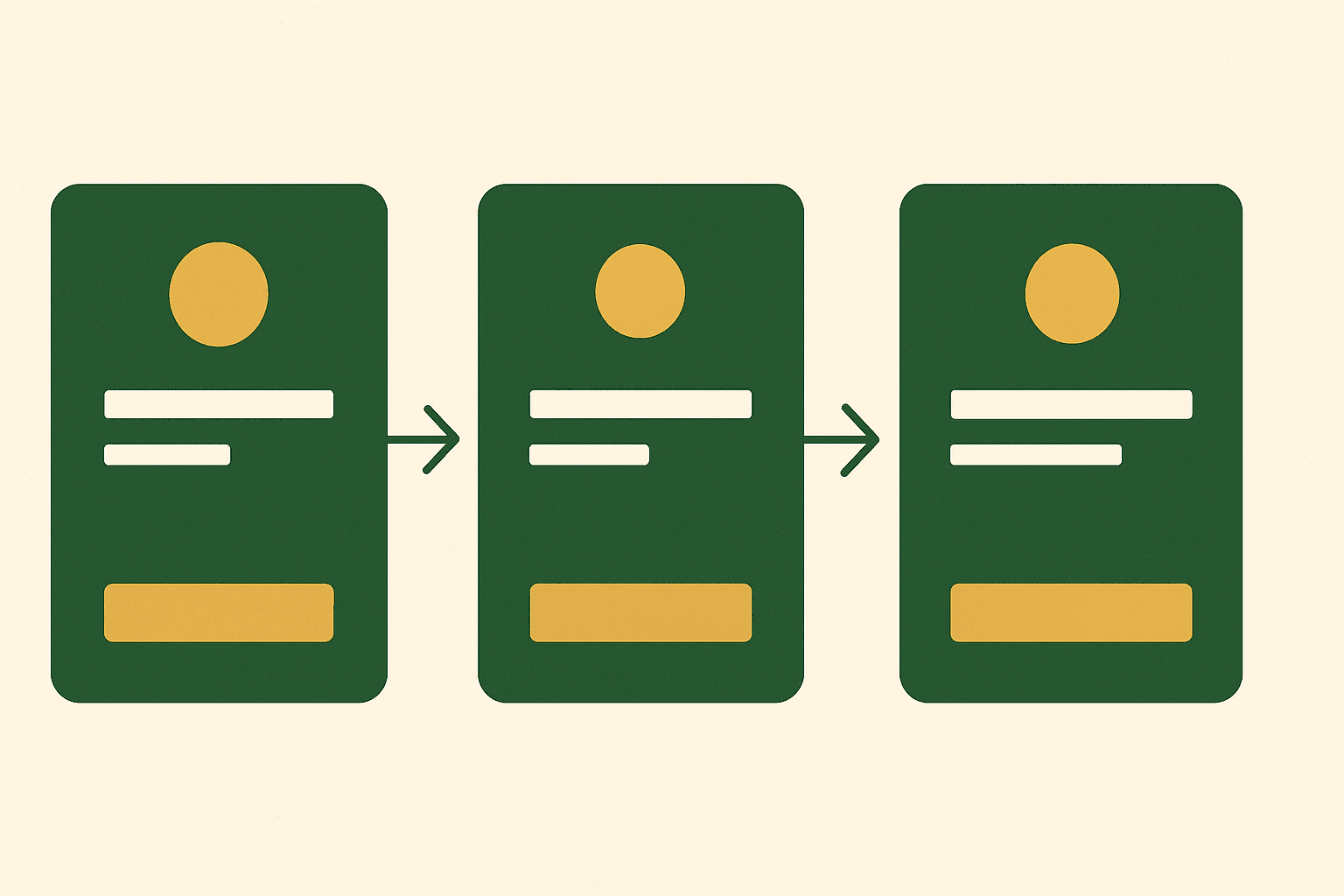
The conversion flow
- Hook — Grab attention in the first 3 seconds with a headline that matches the ad or traffic source
- Promise — State the benefit clearly. What will the visitor gain?
- Proof — Show evidence. Reviews, testimonials, numbers, press logos.
- Explanation — Explain how the product or offer works
- Objection handling — Address concerns preemptively
- Call to action — Make the next step obvious and easy
This is not a rigid formula. Some landing pages need more proof than explanation. Others need extensive objection handling. But every successful page we have built includes these elements in some form.

Building the hero section
The hero section is the most important part of your landing page. Research consistently shows that the majority of visitors make their stay-or-leave decision within the first few seconds. Your hero needs to accomplish three things immediately:
1. Match the traffic source
If your Meta ad says "50% off summer dresses this weekend only", your landing page headline needs to say something very close to that. Any disconnect between ad and landing page creates cognitive friction that kills conversions.
2. Communicate the value proposition
Your headline should answer the visitor's question: "What is in it for me?" Avoid clever wordplay. Be direct. "Handmade ceramic mugs that keep your tea hot for 2 hours" beats "Elevating your beverage experience" every time.
3. Show the product
Use a high-quality hero image or video that shows the product in use. Lifestyle imagery outperforms studio shots on landing pages because it helps visitors imagine owning the product. If you can, use video — even a simple 10-second loop of someone using the product can lift conversion rates significantly.
Hero section best practices
- Keep the headline under 10 words
- Place the primary CTA above the fold on desktop and mobile
- Use a contrasting button colour that stands out from the background
- Add a secondary line of text for supporting detail (delivery promise, discount amount, limited availability)
- Ensure the hero image loads fast — compress it and serve the right size for each device
Adding social proof that converts
Social proof is the single most powerful conversion lever on a landing page, especially for brands that visitors have not heard of before. Here are the types of social proof, ranked by effectiveness for ecommerce:
1. Customer reviews with photos
Real reviews from real customers, especially those with photos showing the product in their home or on their person. Pull these from your review platform (Judge.me, Stamped, Loox) and feature the best ones prominently.
2. Star ratings and review counts
"4.8 stars from 2,341 reviews" is a powerful trust signal. Display it near the top of the page, close to your primary CTA.
3. User-generated content
Instagram photos and videos from real customers. These feel more authentic than polished brand photography and help visitors see themselves using the product.
4. Press mentions and awards
Logos from publications that have featured your products. "As seen in Vogue, Elle, and The Guardian" carries weight even without links to the actual articles.
5. Numbers and statistics
"50,000+ happy customers" or "98% would recommend to a friend" provide quick credibility. Only use real numbers — fabricated statistics are both unethical and surprisingly easy for savvy shoppers to spot.
The key is placement. Social proof should appear throughout the page, not just in one dedicated section. Place a star rating near the hero CTA, testimonials after the product explanation, and a review carousel before the final CTA.
Designing CTAs that get clicked
Your call-to-action buttons are where revenue happens. Getting them right is worth obsessing over.
Button copy
Generic button text like "Submit" or "Learn More" underperforms specific, benefit-driven copy. Test these patterns:
- "Add to basket — Free shipping" (combines action with benefit)
- "Get 20% off now" (states the offer)
- "Try it risk-free" (reduces perceived risk)
- "Claim your free sample" (specific and valuable)
Button placement
Place your primary CTA in at least three positions on the page:
- In the hero section (above the fold)
- After the social proof section (mid-page)
- At the bottom of the page (final chance)
For longer landing pages, consider a sticky CTA bar that follows the visitor as they scroll. This is particularly effective on mobile where scrolling back to the top requires effort.

Button design
- Use a colour that contrasts with the page background — your brand colour is fine if it stands out
- Make buttons large enough to tap easily on mobile (minimum 48px height)
- Add micro-interactions (subtle colour change or scale on hover) to make buttons feel responsive
- Include a small arrow or icon to reinforce directionality
Mobile optimisation essentials
Over 70% of ecommerce traffic in the UK comes from mobile devices. If your landing page does not work flawlessly on mobile, you are throwing away the majority of your potential conversions.
Mobile-specific considerations
- Thumb-friendly CTAs. Place primary buttons within easy thumb reach, typically the lower two-thirds of the screen.
- Shorter copy. Mobile visitors scan more aggressively than desktop visitors. Cut your hero headline length and use bullet points instead of paragraphs where possible.
- Stacked layouts. Two-column desktop layouts should stack to single column on mobile. Never use horizontal scrolling.
- Compressed images. Mobile connections are slower. Serve appropriately sized images using Shopify's image API with the
image_urlfilter. - Touch-friendly spacing. Ensure at least 8px between tappable elements to prevent mis-taps.
Test every landing page on at least three devices: an iPhone, a mid-range Android phone, and a tablet. What looks perfect on your MacBook might be completely broken on a Samsung Galaxy A series — and that is what most of your customers are using.
Page speed considerations
Landing page speed directly impacts conversion rates. Every additional second of load time reduces conversions by approximately 7%. For a landing page receiving paid traffic, slow load times waste your ad spend.
Speed optimisation checklist
- Compress all images. Use WebP format where possible. Shopify's CDN handles this automatically if you use the
image_urlfilter. - Limit third-party scripts. Every chat widget, analytics pixel, and tracking script adds load time. For landing pages, strip back to the essentials.
- Avoid landing page builder apps. Apps like Shogun and GemPages load their own JavaScript frameworks on top of your theme. For performance-critical landing pages, native Shopify sections are always faster.
- Lazy load below-the-fold content. Use
loading="lazy"on images that appear below the initial viewport. - Minimise custom fonts. Each font weight and style is an additional file to download. Stick to 2-3 font variants maximum.
For a comprehensive approach to Shopify performance, our Shopify development service includes speed optimisation as standard on every build.
Setting up tracking and analytics
A landing page without proper tracking is a wasted investment. You need to know exactly how many visitors convert, where they drop off, and which elements are performing.
Essential tracking setup
- Google Analytics 4. Set up a custom event for your landing page's primary conversion action. Use UTM parameters on all traffic sources pointing to the page.
- Meta Pixel. If you are running Meta ads, ensure the pixel fires a ViewContent event on page load and a Purchase or Lead event on conversion.
- Heatmap tracking. Tools like Hotjar or Microsoft Clarity show you exactly where visitors click, scroll, and abandon. This data is invaluable for iterating on your page design.
- Shopify Analytics. Use Shopify's built-in reporting to track sessions, conversion rate, and revenue attributed to the landing page URL.
Key metrics to monitor
- Bounce rate. If more than 60% of visitors leave without interacting, your hero section needs work.
- Scroll depth. How far down the page do visitors get? If most leave before the CTA, your content above it is not compelling enough.
- Click-through rate on CTAs. Track each CTA button individually to see which positions and copy perform best.
- Conversion rate. The percentage of visitors who complete the desired action. Benchmark against your industry average.
- Cost per conversion. For paid traffic, divide your ad spend by the number of conversions to ensure profitability.
If you are migrating to Shopify from another platform, make sure your tracking is set up before you start driving traffic to new landing pages.
Common mistakes to avoid
After reviewing hundreds of Shopify landing pages, these are the patterns that consistently underperform:
1. Too many competing CTAs
Every additional call to action dilutes the impact of your primary one. If you want visitors to buy, do not also ask them to subscribe, follow, and share. One page, one goal.
2. Keeping the standard navigation
Your main navigation gives visitors exits. For a focused landing page, consider hiding or minimising the navigation to keep visitors on the conversion path. You can do this with conditional CSS or by using a separate layout file for landing pages.
3. Slow-loading hero images
A hero image that takes 3 seconds to load means 3 seconds of a blank or broken page. This is especially damaging for paid traffic where you are paying per click. Optimise your hero image aggressively and consider using a solid colour background as a fallback while the image loads.
4. Generic copy that could be for any brand
If you replace your brand name with a random competitor's name and the copy still makes sense, it is too generic. Landing page copy should be specific to your product, your customers, and your value proposition.
5. Ignoring the fold on mobile
What visitors see before scrolling on mobile is dramatically smaller than on desktop. If your headline, value proposition, and primary CTA are not visible without scrolling on a mobile device, you will lose a significant percentage of visitors.
6. No urgency or scarcity
Without a reason to act now, visitors bookmark and forget. Time-limited offers, limited stock indicators, or expiring discount codes create genuine urgency. Do not fabricate scarcity — use it when it is real.
For broader guidance on web design best practices, our design team follows these same principles across every project.
The best landing pages do not feel like landing pages. They feel like a natural extension of whatever brought the visitor there — a seamless continuation of the ad, the email, or the social post that started the journey.
Andrew Simpson, Founder
Building high-converting landing pages on Shopify is less about fancy tools and more about clear thinking. Define your goal, understand your visitor, address their objections, and make the next step obvious. Whether you use the theme editor, custom templates, or fully bespoke Liquid code, the principles remain the same.
If you are running significant paid media and need landing pages that perform, our Shopify development and web design teams build conversion-optimised pages as part of every project. Get in touch to discuss what you need.