
The UK stationery and craft market is worth over £4 billion annually, and the shift to online is accelerating. Independent brands selling notebooks, planners, art supplies, craft kits, and paper goods are finding that their products sell remarkably well through ecommerce — provided the store is built to handle the specific demands of the sector.
Stationery and craft brands face a unique set of challenges online. Product personalisation is often central to the proposition. Visual presentation matters enormously when customers cannot touch the paper or feel the weight of a pen. Catalogue sizes can balloon into thousands of SKUs across colours, sizes, and materials. And margins can be tight, making operational efficiency non-negotiable.
Shopify handles all of this well, but only when configured thoughtfully. A generic Shopify setup will leave money on the table. This guide covers the platform decisions, technical configuration, and strategic thinking that separates successful stationery and craft stores from those that struggle to gain traction.
Why Shopify works for stationery and craft brands
Shopify has become the default platform for DTC stationery and craft brands for several practical reasons. The visual flexibility of Online Store 2.0 themes lets you create the kind of rich, image-led shopping experience these products demand. The variant system handles complex product configurations. And the app ecosystem covers the niche needs — personalisation, print-on-demand, subscription boxes — that other platforms struggle with.
But the real advantage is operational. Stationery and craft brands often start as one or two-person operations. The founder is designing products, managing production, handling customer service, and packing orders. Shopify reduces the technical overhead so that time goes into the product and the brand, not into maintaining a website.
The best ecommerce platforms for creative brands are the ones that stay out of the way. Shopify lets you focus on your products and your customers, not on server maintenance and security patches.
There are also practical considerations around integrations. Most UK fulfilment providers, print-on-demand services, and accounting platforms have native Shopify integrations. Royal Mail, DPD, Xero, QuickBooks, Recharge, Gelato — the ecosystem is mature, and the integrations are reliable.

Product personalisation and customisation
Personalisation is where stationery and craft brands often differentiate themselves. Monogrammed notebooks, custom-printed planners, engraved pens, bespoke wedding stationery — these are the products that command premium prices and build customer loyalty. Getting the personalisation experience right on Shopify is critical.
Line item properties for simple personalisation
Shopify's built-in line item properties allow you to add custom text fields, dropdown menus, and checkboxes to product pages. A customer can enter their name, choose a font, or select a foil colour, and that information flows through to the order for your production team. This is the simplest approach and requires no additional apps for basic text personalisation.
The implementation is straightforward. You add input fields to your product template that map to line item properties. These appear in the cart, the order confirmation email, and the admin order view. For brands offering monogramming or simple text engraving, this is often all you need.
Visual product configurators
For more complex personalisation — where customers want to see a real-time preview of their customised product — you need a product configurator app. These let customers upload images, choose colours, position text, and see a rendered preview before adding to cart.
The trade-off is performance. Visual configurators add JavaScript and require rendering, which can slow down product pages. The key is choosing a configurator that loads asynchronously and does not block the initial page render. We typically recommend testing the configurator's impact on your Core Web Vitals before committing to it.
Managing personalised order fulfilment
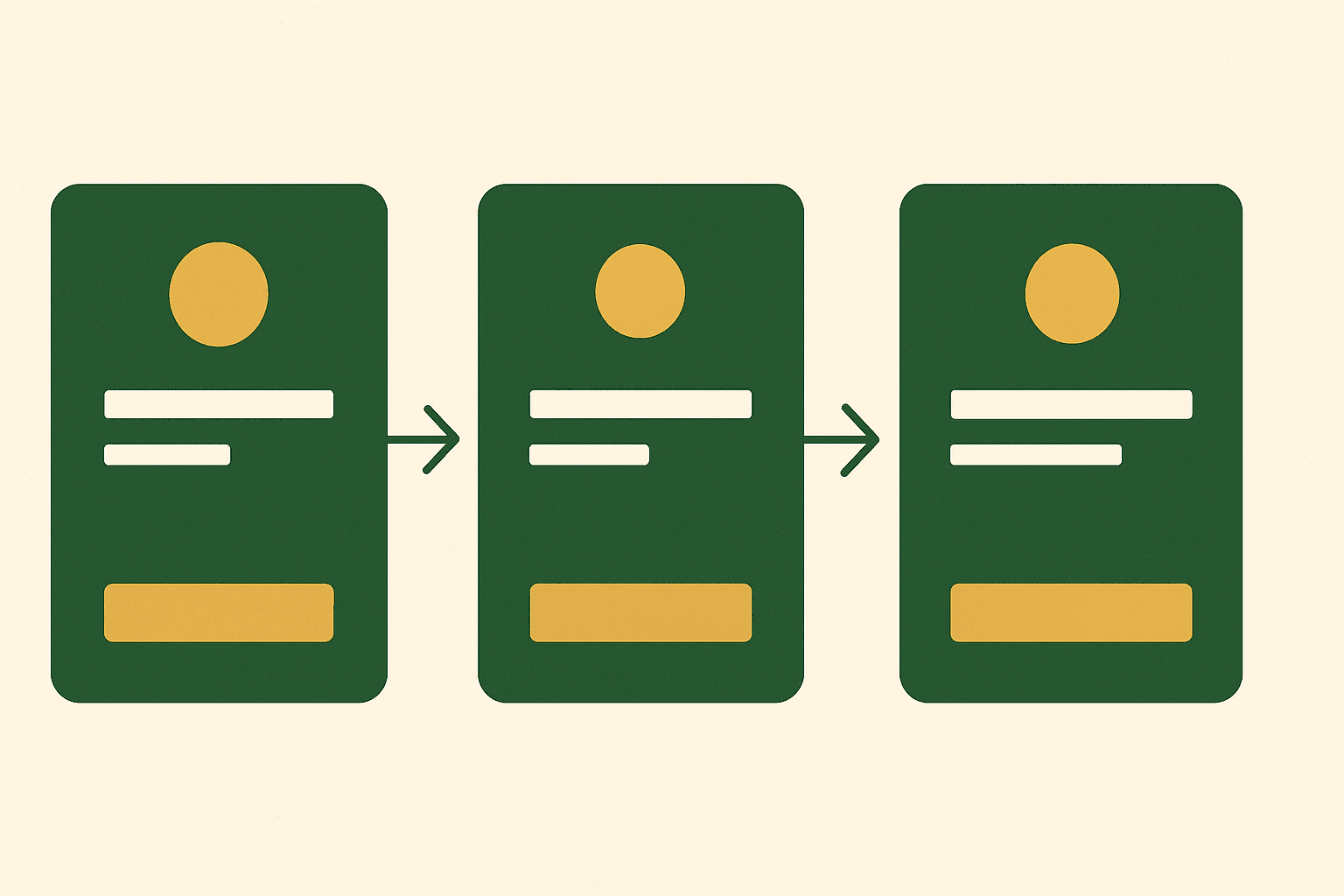
The personalisation workflow does not end at the checkout. You need a system for routing custom details to your production team. This might be as simple as your team reading order notes, or as sophisticated as an automated workflow that generates print-ready files from the order data.
For brands doing volume, consider integrating Shopify with a production management tool via the API or through Shopify Flow. You can automate the creation of personalisation job sheets, flag orders with special requirements, and track production status against the order timeline.
Visual merchandising and catalogue structure
Stationery and craft products are inherently visual. Customers buy with their eyes. The quality of your product photography, the structure of your collections, and the way you present colour and material options all directly influence conversion rate.
Product photography that converts
For stationery products, you need two types of photography: clean product shots on white or neutral backgrounds (for collection pages and search results), and lifestyle or context shots that show the product in use (for product pages and social content). The contrast between these two styles serves different purposes — one helps customers find and compare, the other helps them imagine owning the product.
Shopify's media management supports multiple images per product, video, and 3D models. For stationery brands, we recommend a minimum of five images per product: front view, back view, an open or detail shot, a lifestyle shot, and a scale reference showing the product next to a common object like a hand or a cup.
Collection structure for large catalogues
Stationery brands often have extensive ranges. A notebook brand might offer 30 cover designs, each in three sizes, with lined, dotted, or blank pages. That is 270 variants from a single product line. When you add journals, planners, sticky notes, and accessories, the catalogue gets large quickly.
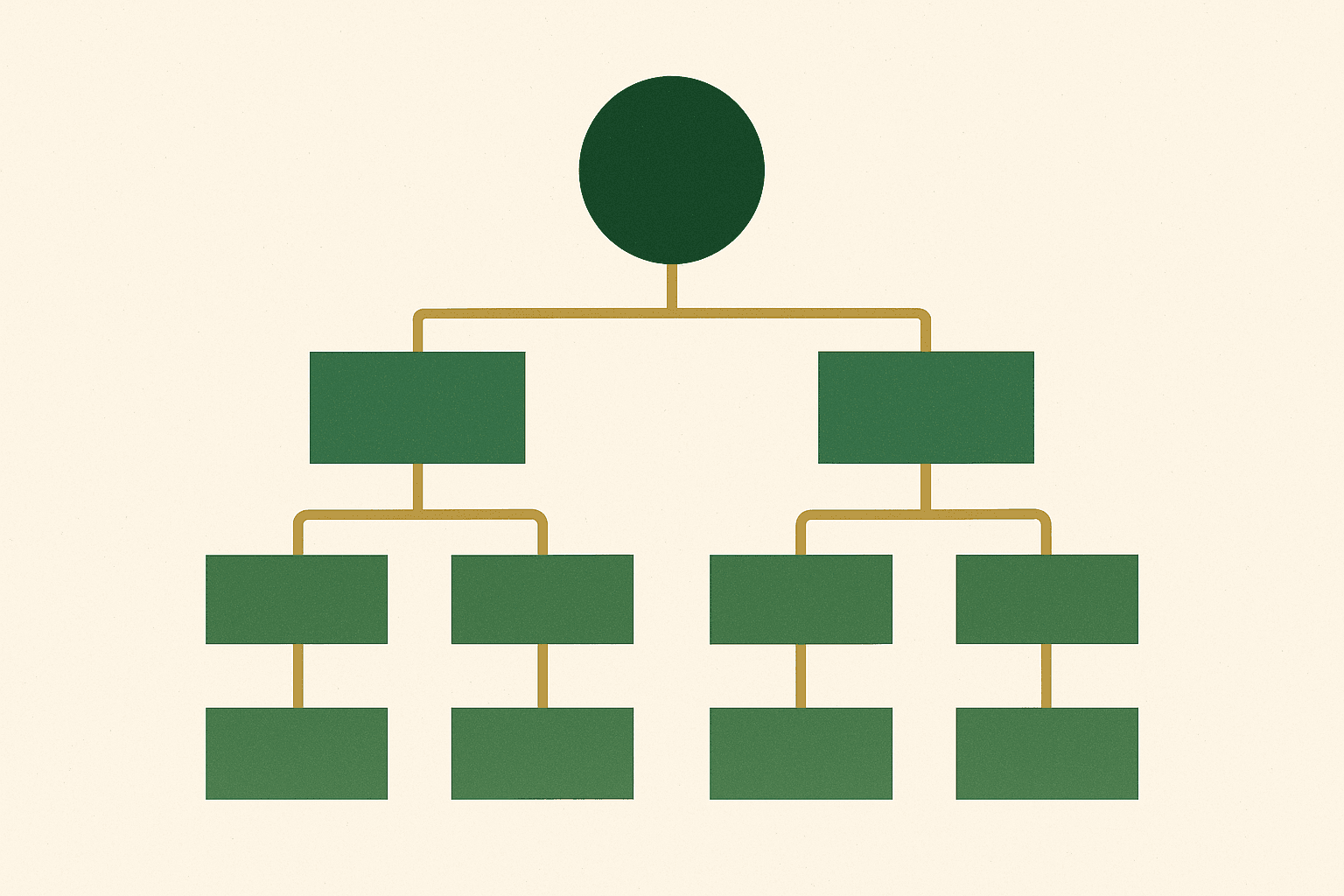
The solution is a multi-level collection structure that mirrors how customers actually think about your products. Top-level collections by product type (Notebooks, Planners, Art Supplies), sub-collections by use case (Work, Study, Creative), and automated collections that pull products by tag, price, or metafield value. This is where Shopify product filters become essential for helping customers navigate.
Colour and material swatches
Colour is a primary purchase driver in stationery. Customers want to see every available colour without clicking through dozens of product pages. Implementing colour swatches on collection pages — where clicking a swatch updates the product image in real time — dramatically improves the browsing experience and reduces bounce rates.
This requires either a theme with built-in swatch support or custom theme development to implement. It is worth the investment: colour swatch implementation on collection pages typically improves add-to-cart rates for stationery brands by a measurable margin.

Bundles, kits, and subscription boxes
Bundling is one of the most effective strategies for stationery and craft brands, for two reasons. First, it increases average order value. Second, it solves the discovery problem — customers who buy a curated kit are exposed to products they might not have found individually.
Fixed bundles
Fixed bundles are pre-defined product sets sold as a single SKU. A back-to-school stationery pack, a calligraphy starter kit, or a wedding planning bundle. These are simple to set up on Shopify: create a product, price it at the bundle price, and manage the component inventory using Shopify Bundles or a similar app that deducts stock from individual items.
Mix-and-match bundles
Mix-and-match bundles let customers build their own kit from a curated selection. "Choose any five items from our range for £25" or "Build your own stationery set." This is more complex to implement but significantly more engaging. Customers spend longer on site, explore more products, and feel ownership over their purchase.
The technical challenge is inventory management. When a customer adds three pens, a notebook, and an eraser to a bundle, each component's stock needs to decrement correctly. Shopify's native bundle support handles this, but for more sophisticated configurations — like tiered pricing or minimum quantities per category — you may need a dedicated bundling app.
Subscription and replenishment boxes
Craft subscription boxes have become a significant revenue stream for creative brands. Monthly craft kits, quarterly stationery boxes, or rolling supply replenishment — subscriptions create predictable recurring revenue and dramatically improve customer lifetime value.
On Shopify, subscriptions require a subscription app that integrates with the checkout. Recharge and Loop are the most widely used options for UK brands. The key considerations are: Can customers manage their own subscription (swap products, skip a month, change delivery frequency)? Does the app handle the UK's subscription billing regulations? And does it integrate with your email marketing flows?
SEO and content strategy for craft brands
Stationery and craft brands have a significant content marketing advantage: their customers are passionate about what they do. Whether it is bullet journaling, calligraphy, watercolour painting, or scrapbooking, these are active communities with dedicated search volume. The brands that capture this organic traffic build sustainable acquisition channels that do not depend on paid advertising.
Targeting long-tail product queries
The highest-converting search traffic for stationery brands comes from specific product queries: "dotted A5 notebook," "watercolour brush pen set," "washi tape dispenser." These searches indicate purchase intent. Optimising your product pages and collection pages for these terms is the foundation of your SEO strategy.
This means writing unique product descriptions that include the specific attributes customers search for — paper weight (in GSM), page count, dimensions, material composition, and use case. Avoid the temptation to copy manufacturer descriptions. Unique content ranks better and converts better.
Tutorial and inspiration content
Beyond product pages, craft brands can build enormous organic traffic through tutorial content. "How to start bullet journaling," "watercolour techniques for beginners," "calligraphy practice sheets" — these queries have substantial monthly search volume and attract customers at the top of the funnel.
Shopify's blog functionality handles this well. The key is linking from tutorial content to relevant products naturally. A bullet journaling tutorial should link to your dotted notebooks and fine-tip pens. A calligraphy guide should link to your ink sets and nibs. This creates a content-to-commerce pathway that drives both organic traffic and revenue.
Email marketing for stationery brands
Email is disproportionately effective for stationery and craft brands because the purchase cycle is naturally recurring. Pens run out of ink. Notebooks fill up. Craft supplies are consumed. This means you are not just selling a one-off purchase — you are building a relationship with a customer who will need to reorder.
Core automated flows
The essential email flows for stationery brands mirror those of any ecommerce brand, but the content and timing differ. Your welcome series should introduce your brand story and your most popular products. Your abandoned cart flow should include product images that remind customers of the exact items they were considering. And your post-purchase flow should include usage tips, care instructions, and complementary product recommendations.
The flow that matters most for stationery brands is the replenishment flow. If a customer buys a pack of 12 fineliner pens, you can estimate when they will need more based on typical usage patterns. A well-timed "time to restock?" email, sent with a direct link to reorder, drives significant repeat revenue.
Launch and seasonal campaigns
Stationery has strong seasonality. Back-to-school (August-September), Christmas gifting (November-December), and new year planning (January) are peak periods. Building your email calendar around these moments — with early access for subscribers, gift guides, and limited edition launches — turns email into a predictable revenue channel.
New product launches are also email gold for craft brands. Your subscribers are enthusiasts who want to know about new colours, new materials, and new product lines before anyone else. Treat your email list as an insider community, not a promotional channel.
Fulfilment and operational considerations
Stationery and craft products have specific fulfilment requirements that your Shopify setup needs to accommodate. Many items are fragile, oddly shaped, or require protective packaging. Some products are heavy (like large sketch pads or clay) and affect shipping costs. And personalised items need special handling to ensure the right customisation reaches the right customer.
Packaging and presentation
For stationery and craft brands, the unboxing experience is part of the product. Customers who buy premium notebooks and artisan craft supplies expect their order to arrive beautifully presented. This has implications for your packaging costs, fulfilment workflow, and shipping dimensions.
On Shopify, you can configure shipping profiles that account for different product sizes and weights. For brands offering gift wrapping or premium packaging as an upsell, this is easily implemented as a cart add-on or a product property.
Shipping considerations for the UK market
Many stationery items qualify for Royal Mail's Large Letter rate, which is significantly cheaper than parcel rates. A5 notebooks, greeting card sets, and flat stationery items can often be designed to fit within the 25mm thickness limit. This shipping cost advantage can be the difference between profitability and loss on lower-value orders.
Configure your Shopify shipping settings to reflect these different rates. Use weight-based or price-based shipping tiers that incentivise customers to add more items without the shipping cost becoming a barrier. Free shipping thresholds are particularly effective for stationery brands because the average item price is low enough that customers will happily add one or two more items to qualify.

Essential apps and integrations
The temptation with Shopify is to install an app for everything. Resist it. Every app adds JavaScript, HTTP requests, and potential conflicts. For stationery and craft brands, we recommend keeping your app stack lean and purposeful. Here is what most brands in this sector genuinely need, and you can explore more options on our apps page:
| Function | What it does | Why it matters |
|---|---|---|
| Product personalisation | Custom text fields, image uploads, live preview | Core to the value proposition for many stationery brands |
| Product filtering | Filter by colour, material, size, price, paper type | Essential for navigating large catalogues with hundreds of SKUs |
| Email marketing | Automated flows, segmentation, campaigns | Drives repeat purchases and seasonal revenue peaks |
| Reviews with photos | Customer reviews with image and video uploads | User-generated content builds trust and shows products in real use |
| Bundles | Fixed and mix-and-match product bundles | Increases AOV and product discovery |
| Subscriptions | Recurring orders and subscription box management | Predictable revenue and improved customer lifetime value |
Notice what is not on that list: pop-up builders, countdown timers, and gamification widgets. These are distractions that slow down your site and cheapen your brand. Stationery and craft customers respond to quality, curation, and authenticity — not urgency tactics.
Common mistakes to avoid
After working with brands across the stationery and creative sectors, we see the same mistakes repeated. Here are the ones that cost the most revenue:
- Poor product photography. Flat, poorly lit images undermine even the best products. Invest in photography before you invest in marketing. A beautiful product shot converts better than any amount of ad spend.
- Ignoring mobile. Over 70% of stationery purchases start on mobile. If your product personalisation workflow is clunky on a phone — tiny text fields, unreachable buttons, unresponsive previews — you are losing the majority of your potential customers.
- Too many variants, not enough products. Instead of one product with 200 variants, consider splitting into multiple products grouped by collection. This gives each product its own URL, its own SEO value, and its own set of product images. The customer experience is better, and your organic traffic potential multiplies.
- No content strategy. Stationery and craft customers are information seekers. They want tutorials, inspiration, and technique guides. Brands that publish useful content build organic traffic and authority. Those that only publish product pages compete on paid advertising alone.
- Underpricing shipping. Free shipping is powerful, but it needs to be built into your product pricing or applied above a minimum threshold. Absorbing shipping costs without adjusting product prices erodes margins that are already tight in stationery.
Scaling your stationery or craft brand
The scaling trajectory for stationery and craft brands on Shopify typically follows a predictable path. The early stage is about product-market fit and building an audience. The growth stage is about operational efficiency and channel diversification. The scale stage is about wholesale, international expansion, and brand extensions.
From DTC to wholesale
Many stationery brands start as DTC but receive wholesale enquiries from retailers, gift shops, and department stores. Shopify handles B2B wholesale through Shopify Plus's native B2B features or through wholesale-specific apps. The key decision is whether to create a separate wholesale channel with trade pricing, minimum order quantities, and net payment terms, or to handle wholesale through a manual process.
For brands on standard Shopify plans, a password-protected wholesale collection with trade-priced products is the simplest approach. For brands doing significant wholesale volume, Shopify Plus provides a dedicated B2B channel with company accounts, custom price lists, and purchase order workflows.
International expansion
The UK stationery market is strong, but international demand for British stationery brands is growing. Shopify Markets makes it straightforward to sell internationally with localised pricing, automatic duties calculation, and multi-currency checkout. For brands with a strong brand identity and unique products, international expansion can be the fastest growth lever available.
Product line extensions
Successful stationery brands often expand into adjacent categories: bags, desk accessories, tech accessories, or home office products. Shopify's flexible product organisation system makes it easy to add new product categories without restructuring your store. The important thing is maintaining a coherent brand experience as you expand — the new categories should feel like a natural extension of your existing range.
We have seen stationery brands double their revenue within 18 months of launching complementary product lines, provided the products share the same design language and appeal to the same customer. A notebook brand that launches matching pen cases and desk organisers is building an ecosystem, not just adding SKUs.
If you are building or scaling a stationery or craft brand on Shopify and want to discuss your specific requirements, start a conversation with us. We understand the sector's unique challenges and can help you build a store that does justice to your products. You can also explore our Shopify development services and web design approach to see how we work.
The stationery and craft sector rewards brands that invest in the details — in product presentation, customer experience, and operational efficiency. Shopify provides the platform. The difference between a store that grows and one that plateaus comes down to how thoughtfully you use it.