Jewellery is one of the most demanding categories in ecommerce. The product is small, intricate, and often expensive. Customers cannot try it on, cannot feel the weight, cannot see how light catches a stone. Every element of your online store needs to compensate for the absence of the physical experience that a jeweller's counter provides.
The brands that sell jewellery successfully online understand this fundamental challenge and build their entire store experience around solving it. They invest in photography that captures craftsmanship, product pages that answer every question before it is asked, and a checkout experience that feels secure enough for a four-figure purchase on a mobile phone.
This guide covers everything we have learned building Shopify stores for jewellery brands — from independent designers selling handmade pieces to established houses with catalogues of hundreds of products across multiple metal and stone combinations.
Why jewellery is different online
Most ecommerce best practices were developed for categories like apparel, beauty, and homewares — products where the purchase decision is relatively low-friction. Jewellery breaks many of these conventions because it introduces challenges that other categories do not face.
High consideration, high anxiety. The average order value for jewellery is significantly higher than most ecommerce categories. A customer spending £300 on a pair of earrings or £2,000 on an engagement ring has a proportionally higher anxiety level about making the wrong choice. Every element of your store needs to reduce this anxiety.
Sizing uncertainty. Ring sizing is the single biggest barrier to online jewellery purchases. Customers worry about ordering the wrong size, and the returns process for sized jewellery is more complex than returning a jumper. Your store needs to make sizing as foolproof as possible.
Visual complexity. Jewellery is three-dimensional, reflective, and often contains elements that are difficult to photograph accurately. A diamond looks different under natural light than under studio lighting. A gold tone on screen may not match the customer's expectation. Photography is not just marketing — it is the primary way customers evaluate the product.
Emotional purchase drivers. Much jewellery is purchased as a gift or to mark a significant occasion. The buying journey is emotionally charged, and the store experience needs to support that emotional context without exploiting it. This affects everything from copywriting tone to checkout messaging.
Gift giving complexity. Gift purchases introduce additional friction: the buyer may not know the recipient's size, may want gift wrapping, may need the piece delivered to a different address, and may want a personal message included. Your store needs to handle all of these scenarios gracefully.

Photography that sells
Photography is the foundation of a jewellery ecommerce store. If your photography is mediocre, nothing else matters — no amount of clever UX or marketing will compensate for images that fail to capture the beauty and quality of the pieces.
What you need per product
Every jewellery product should have a minimum of five to seven images:
- Hero image. Clean, white background, product only. This is the image that appears on collection pages and in search results. It needs to be sharp, well-lit, and show the full product clearly.
- Detail shots. Close-up images showing craftsmanship, stone setting, clasp mechanisms, hallmarks, and texture. These images build confidence in quality and justify the price.
- Scale shots. The product worn on a model or shown next to an object that provides scale. Customers consistently overestimate or underestimate the size of jewellery from product-only photos.
- Lifestyle shots. The product in context — being worn, styled with an outfit, or placed in an environment that reflects your brand aesthetic. These images sell the aspiration, not just the product.
- Packaging shot. Show how the product arrives. Jewellery packaging is part of the experience, particularly for gifts. A beautiful presentation box reassures the buyer that the unboxing experience matches the product quality.
For high-value pieces, consider 360-degree photography or short video clips. These are particularly effective for engagement rings and statement pieces where customers want to see how light interacts with the stones from every angle.
Technical considerations
Jewellery photography presents specific technical challenges. Reflective metals create hotspots and colour casts. Stones need careful lighting to show brilliance without overexposure. Small pieces require macro photography that maintains sharpness across the entire product.
Invest in professional photography. This is not an area where you can compromise. The cost of a professional jewellery photography session is a fraction of the revenue lost from poor images. If you are shooting regularly as new collections launch, establish a repeatable setup with consistent lighting, backgrounds, and angles so your product catalogue looks cohesive.
On the technical side, ensure your images are optimised for web without sacrificing quality. Shopify's image CDN handles format conversion and responsive sizing, but you should upload source images at a minimum of 2048 pixels wide so the zoom functionality renders detail crisply. For guidance on maintaining performance while using high-quality imagery, our guide on product page anatomy covers the balance between visual quality and speed.
Product pages that convert
The jewellery product page carries more weight than in almost any other category. It needs to function as a virtual sales assistant — answering questions, building confidence, handling objections, and guiding the customer to a purchase decision.
Essential product page elements
Material specifications. Be precise and transparent about materials. State the metal type (9ct gold, 18ct gold, sterling silver, platinum), stone types and origins, dimensions in millimetres, and weight in grams. Customers researching jewellery online are detail-oriented. Vague descriptions like "gold-plated" without specifying the base metal or plating thickness undermine trust.
Size guide integration. For rings, the size guide should be accessible without leaving the product page. Use a modal or slide-out panel that includes UK, US, and EU conversions, a printable ring sizer, and instructions for measuring an existing ring. For necklaces, show chain lengths on a figure diagram so customers can visualise where the pendant will sit.
Care instructions. Include care and maintenance information directly on the product page or in an easily accessible tab. This serves two purposes: it demonstrates product knowledge and expertise, and it reduces post-purchase support enquiries. Customers want to know how to clean, store, and maintain their jewellery.
Delivery and returns information. For high-value purchases, delivery and returns information must be visible and detailed. State whether the item is shipped insured, the delivery timeline, the returns window, and the process for size exchanges. Hiding this information in footer pages reduces conversion because customers will not commit to a significant purchase without knowing the safety net.
Reviews with photos. Photo reviews are exceptionally powerful for jewellery. They show the product on real people in real lighting, which provides a more authentic representation than studio photography alone. Prioritise a reviews app that supports photo uploads and displays them prominently.
Product descriptions
Jewellery product descriptions need to balance technical accuracy with emotional appeal. Lead with a short, evocative paragraph that captures the spirit of the piece. Follow with detailed specifications in a structured format (dimensions, materials, weight, stone details). This serves both the emotional buyer who makes a quick decision and the analytical buyer who needs every detail before committing.
Avoid generic marketing language. "This stunning piece is perfect for any occasion" tells the customer nothing. "Handcrafted in our Birmingham workshop from recycled 18ct yellow gold, set with a 0.5ct VS1 Canadian diamond" tells them everything they need to know.
Managing variant complexity
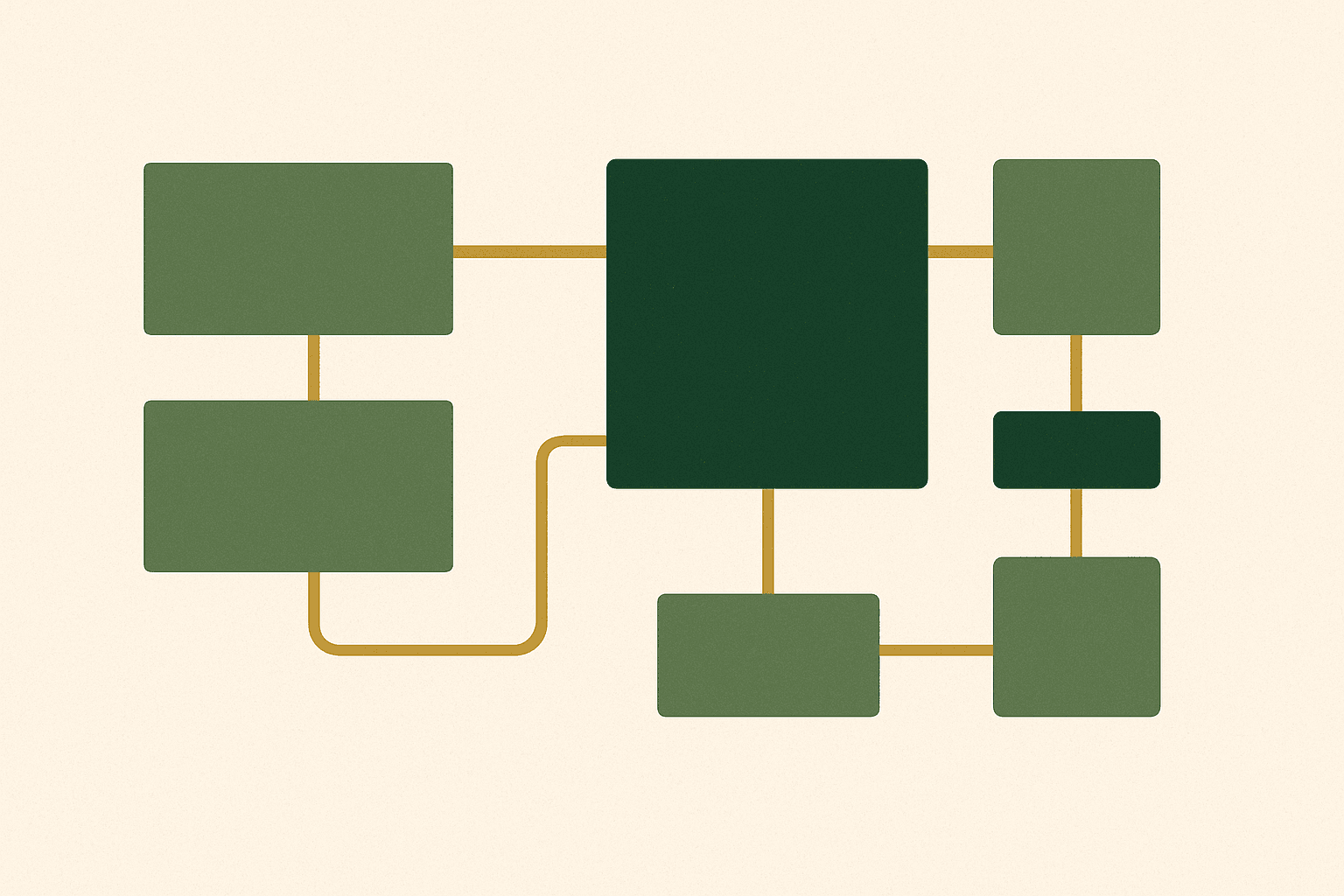
Jewellery variant structures are among the most complex in ecommerce. A single ring design might be available in three metals, five ring sizes, and two stone options — producing 30 variants from a single product. Multiply that across a catalogue of 200 products, and you are managing thousands of variants.
Shopify handles this complexity through its variant system, but the default implementation has limitations. Shopify's standard limit of three options per product (e.g., metal, size, stone) and 100 variants per product can become restrictive for brands with extensive customisation options.
Solutions for complex variants
Combined options. If you need more than three options, consider combining related options. "18ct Yellow Gold / Diamond" as a single option rather than separate metal and stone selections. This reduces the option count while maintaining the selection experience.
Separate products for major variants. If a design is available in fundamentally different versions (e.g., a solitaire ring versus a halo setting), consider listing them as separate products with cross-links. This simplifies the variant structure and allows for different photography, descriptions, and pricing.
Custom product builders. For highly personalised jewellery — bespoke engagement rings, for instance — consider a custom product builder that steps customers through the selection process. Metal, then setting style, then stone shape, then stone size. This guided experience converts better than presenting all options simultaneously.
The right approach depends on your catalogue complexity and your customer's decision-making process. For most jewellery brands, Shopify's native variant system with thoughtful option structuring handles the requirement well. Our apps page covers filtering tools that help customers navigate complex jewellery catalogues effectively.
Trust signals for high-value purchases
Trust is the currency of online jewellery sales. Customers are making significant financial commitments without physically examining the product. Your store needs to provide enough trust signals to bridge this gap.
Essential trust elements
- Certifications and hallmarks. If your jewellery carries UK hallmarks, state this prominently. For diamond jewellery, mention certification (GIA, IGI) and make certificates available on request. These industry-standard markers of quality are familiar to informed buyers and reassure less experienced ones.
- Secure payment badges. Display payment security indicators clearly. Shopify provides SSL encryption by default, but customers need to see visual confirmation. Include logos for accepted payment methods, particularly those with buyer protection like PayPal and Klarna.
- Insurance and delivery. State explicitly that items are shipped with full insurance and require signature upon delivery. For high-value pieces, consider offering tracked and insured courier delivery as the only option — customers will not mind paying for secure delivery when the item is worth several hundred pounds or more.
- Returns and exchanges. A generous returns policy is a conversion tool, not a cost centre. For jewellery, a 30-day returns window with free returns for UK customers reduces purchase anxiety significantly. The actual return rate on jewellery is typically lower than apparel because customers have usually done extensive research before purchasing.
- Brand story and provenance. Jewellery customers care about where their pieces come from, who made them, and the values of the brand. A detailed about page with workshop photography, maker profiles, and sourcing information builds an emotional connection that supports the purchase decision.
Social proof
Reviews, testimonials, and press mentions carry particular weight in jewellery. A five-star review from a customer who purchased an engagement ring and proposed successfully is worth more than any marketing copy you could write. Actively collect reviews and display them prominently — on product pages, on collection pages, and on the homepage.
Press coverage and editorial features also serve as powerful trust signals. If your jewellery has been featured in publications, display these prominently. "As seen in" sections with recognisable publication logos provide instant credibility.
Collection page strategy
Jewellery collection pages serve a different purpose than in most ecommerce categories. Customers often browse by occasion (engagement, wedding, anniversary, gift), by type (rings, necklaces, earrings, bracelets), by material (gold, silver, platinum), or by price range. Your collection structure needs to accommodate all of these browsing patterns.
Collection structure
We recommend a multi-layered collection approach for jewellery brands:
- Type collections: Rings, Necklaces, Earrings, Bracelets, Brooches.
- Material collections: Gold, Silver, Platinum, Rose Gold.
- Occasion collections: Engagement, Wedding, Anniversary, Birthday, Gifts.
- Price collections: Under £100, £100-£250, £250-£500, £500+.
- New and bestseller collections: New Arrivals, Bestsellers, Last Chance.
Products should appear in multiple collections. A 9ct gold diamond engagement ring should appear in Rings, Gold, Engagement, and the relevant price bracket. Shopify's automatic collection rules make this manageable at scale using product tags and metadata.
Collection pages for jewellery benefit enormously from sophisticated filtering. Customers need to filter by metal, stone type, price range, and style simultaneously. A well-implemented filtering system can significantly improve the browsing experience and reduce the time from discovery to purchase. For SEO considerations on collection pages, our post on collection page SEO covers the technical approach in detail.

Engraving and personalisation
Personalisation is increasingly important for jewellery brands. Engraving, custom lengths, bespoke stone selections, and monogramming add value and create products that customers are emotionally attached to — which reduces returns and increases customer loyalty.
Implementation approaches
Shopify handles personalisation through a combination of line item properties and custom product fields. The customer enters their personalisation details (engraving text, initials, date) on the product page, and these details flow through to the order for your production team.
Key considerations for personalisation:
- Set character limits and explain which characters are available (not all engraving methods support special characters or lowercase letters).
- Show a preview of the personalisation where possible. Even a simple text preview that renders the customer's text in the engraving font builds confidence.
- Clearly state that personalised items cannot be returned or exchanged. This is standard practice, but it must be communicated before purchase, not after.
- Price personalisation transparently. If engraving costs an additional £15, show this clearly rather than burying it in the checkout.
The checkout experience
The checkout is where jewellery stores either close the sale or lose it. A customer who has spent 20 minutes selecting a piece, choosing the right size, and reading reviews will abandon if the checkout feels insecure, confusing, or lacking in the details they need.
Jewellery-specific checkout considerations
Gift options. Build gift functionality directly into the checkout flow. Gift wrapping selection, gift message input, and separate delivery address for gifts should be straightforward and obvious. For jewellery, a significant percentage of purchases are gifts, and friction in the gift flow means lost sales.
Payment options. Offer multiple payment methods including buy-now-pay-later options. Services like Klarna and Clearpay are particularly effective for jewellery because they reduce the perceived financial commitment. A customer who hesitates at a £400 purchase may commit when they see "4 interest-free payments of £100." This is not about encouraging irresponsible spending — it is about removing a genuine psychological barrier for customers who can afford the purchase but feel anxious about the upfront cost.
Shipping transparency. Display shipping costs, estimated delivery dates, and insurance details within the checkout. "Your order will be shipped via insured Royal Mail Special Delivery, arriving within 1-2 working days" is the level of detail customers need for a valuable purchase.
For a deeper look at checkout optimisation across all ecommerce categories, see our checkout optimisation guide. If you are considering a custom Shopify build, we can implement bespoke checkout experiences that match your brand's luxury positioning.
SEO for jewellery brands
Jewellery SEO has unique characteristics that require a tailored approach. Search intent varies widely — from high-intent commercial searches ("18ct gold engagement ring UK") to early-stage research ("types of gold for jewellery") to gift-related queries ("anniversary jewellery gifts for her").
Keyword strategy
Structure your keyword targeting around the customer journey:
- Awareness stage: Educational content about metals, stones, care, and styling. Blog posts targeting queries like "how to choose an engagement ring" or "difference between 9ct and 18ct gold."
- Consideration stage: Collection pages targeting category + attribute searches. "Gold hoop earrings," "diamond tennis bracelet," "men's silver signet ring."
- Decision stage: Product pages optimised for specific product searches and long-tail queries with purchase intent.
Product schema
Implement comprehensive Product schema on all product pages. For jewellery, include material, colour, brand, price, availability, reviews, and any relevant certifications. Rich results in search displaying price, reviews, and availability directly increase click-through rates for jewellery searches.
Image SEO
Given the visual nature of jewellery, Google Images and Google Shopping are significant traffic sources. Optimise every product image with descriptive file names and alt text that includes the product name, material, and type. "18ct-yellow-gold-diamond-solitaire-ring-front.jpg" outperforms "IMG_4523.jpg" in image search rankings.

Email marketing and lifecycle
Jewellery has a unique customer lifecycle that demands a tailored email marketing approach. Purchase frequency is lower than consumable categories, but the relationship potential is enormous. A customer who buys an engagement ring may return for wedding bands, anniversary gifts, and milestone jewellery for decades.
Essential email flows for jewellery
Browse abandonment. Jewellery has extended consideration periods. A customer who views a product three times over two weeks is a high-intent prospect. Trigger gentle, non-pushy browse abandonment emails that include the viewed product, additional imagery, and reviews.
Cart abandonment. Jewellery cart abandonment rates are typically higher than average because of purchase anxiety. Your abandonment sequence should address the most common objections: sizing certainty, returns policy, delivery security, and payment options. Include trust signals in every email.
Post-purchase nurture. After purchase, send care instructions, styling suggestions, and invitations to join your community. This is also the appropriate time to introduce loyalty or referral programmes. A satisfied jewellery customer is one of the most valuable referral sources in ecommerce.
Anniversary and milestone reminders. If you collect date information (purchase date, engraving dates that suggest anniversaries), use it to trigger reminder emails. "Your anniversary is approaching — discover our new collection" is a high-converting message when timed correctly.
New collection launches. Jewellery customers who have purchased previously are your highest-value audience for new collections. Give them early access, behind-the-scenes content, or exclusive previews. This builds loyalty and drives repeat purchases.
The best jewellery stores online do not try to replicate the in-store experience. They create a different experience that is better in the ways that matter online: comprehensive information, beautiful imagery from every angle, and the confidence that comes from transparent policies and genuine reviews.
Andrew Simpson, Founder
Building your jewellery store
Selling jewellery online is a craft in itself. It demands exceptional photography, meticulous product information, sophisticated variant management, and a checkout experience that matches the premium nature of the product. Shopify provides the platform — but the execution determines whether your online presence does justice to your pieces.
The brands that succeed treat their online store with the same attention to detail they apply to their jewellery. Every image, every description, every interaction is crafted to build the trust that a physical shop floor provides naturally.
For further reading, explore our guides on Shopify apps worth paying for, product page anatomy, store launch checklist, migration checklist, and image optimisation. Our web design service page outlines how we approach luxury and premium brand experiences.
If you are building or redesigning a jewellery store on Shopify, start a conversation. We will give you an honest assessment of your current setup and where the biggest opportunities lie.