Cart abandonment is the single largest source of lost revenue for most Shopify stores. Not slow pages, not bad SEO, not weak product photos — although all of those matter. The sheer volume of potential revenue sitting in abandoned carts dwarfs every other conversion problem.
A store doing £200,000 per month with a 70% cart abandonment rate has approximately £466,000 worth of products sitting in abandoned carts every month. If you recover even 10% of that through better on-site experience and email recovery, you have added £46,600 in monthly revenue. That is the kind of number that changes a business.
This guide covers everything we have learned about reducing cart abandonment on Shopify over twenty years of building and operating ecommerce brands. Not theory — practices we use with our own brands and our clients.
The scale of the problem
Let us start with the numbers, because they are sobering. The average cart abandonment rate across all ecommerce sits at approximately 70%. Shopify stores are broadly consistent with this average. That means for every 100 shoppers who add something to cart, 70 leave without completing their purchase.
This is not entirely preventable. Some cart abandonment is natural and healthy — people use carts as wish lists, they comparison shop, they are interrupted by real life. Research suggests that roughly 30-40% of cart abandonment falls into this "non-recoverable" category.
But that still leaves 30-40% of abandoners who wanted to buy and were stopped by something within your control. That is the opportunity.

The financial impact by store size
| Monthly revenue | Estimated abandoned cart value | 10% recovery value | Annual impact |
|---|---|---|---|
| £50,000 | £116,667 | £11,667 | £140,000 |
| £100,000 | £233,333 | £23,333 | £280,000 |
| £250,000 | £583,333 | £58,333 | £700,000 |
| £500,000 | £1,166,667 | £116,667 | £1,400,000 |
These are not aspirational numbers. A 10% recovery rate is realistic for stores that implement the fundamentals covered in this guide. Many stores we work with achieve 12-18% recovery through a combination of on-site optimisation and email sequences.
Why people really abandon carts
Before you can fix cart abandonment, you need to understand why it happens. The reasons are well-documented and consistent across industries:
- Unexpected costs (48-55%) — Shipping charges, taxes, or fees that were not visible before checkout.
- Required account creation (24-26%) — Being forced to create an account before purchasing.
- Complex or long checkout (17-22%) — Too many steps, too many fields, too much friction.
- Could not see total cost upfront (16-18%) — The total order cost was unclear or hard to find.
- Delivery too slow (16-18%) — Expected delivery times did not meet expectations.
- Trust concerns (15-17%) — The site did not feel secure or trustworthy enough for payment.
- Website errors (12-15%) — Crashes, slow loading, or broken functionality.
- Unsatisfactory returns policy (10-12%) — The returns policy was too restrictive or hard to find.
- Insufficient payment options (7-9%) — Preferred payment method not available.
Notice that the top three causes are all within your control. Pricing transparency, guest checkout, and a streamlined checkout process would address over half of all preventable abandonment.
Pricing transparency: the single biggest lever
If you do nothing else from this guide, do this: make sure customers know the full cost of their order before they reach checkout. Surprise costs at checkout are the number one reason people abandon.
Display shipping costs early
There are several approaches, each with trade-offs:
- Free shipping with a threshold. "Free shipping on orders over £50" is clear, simple, and gives customers a target to hit. Display this site-wide in an announcement bar.
- Flat-rate shipping. A simple "£3.95 delivery on all UK orders" displayed on product pages removes uncertainty. Even if the cost is higher than some competitors, the transparency builds trust.
- Shipping calculator in cart. If your shipping rates vary by weight, destination, or service level, add a shipping estimator to the cart page or cart drawer so customers can see costs before proceeding to checkout.
We tested adding a shipping cost estimator to the cart drawer for a store we manage doing £150K/month. Cart-to-checkout conversion improved by 8% in the first month. The cost was not lower — it was just visible earlier. That was enough.
Free shipping thresholds as an AOV lever
Free shipping thresholds serve double duty: they reduce abandonment and increase average order value. Set your threshold 15-25% above your current AOV. If your AOV is £45, a £55 free shipping threshold encourages customers to add one more item. This connects directly to smart cart strategies that boost AOV.
Removing checkout friction
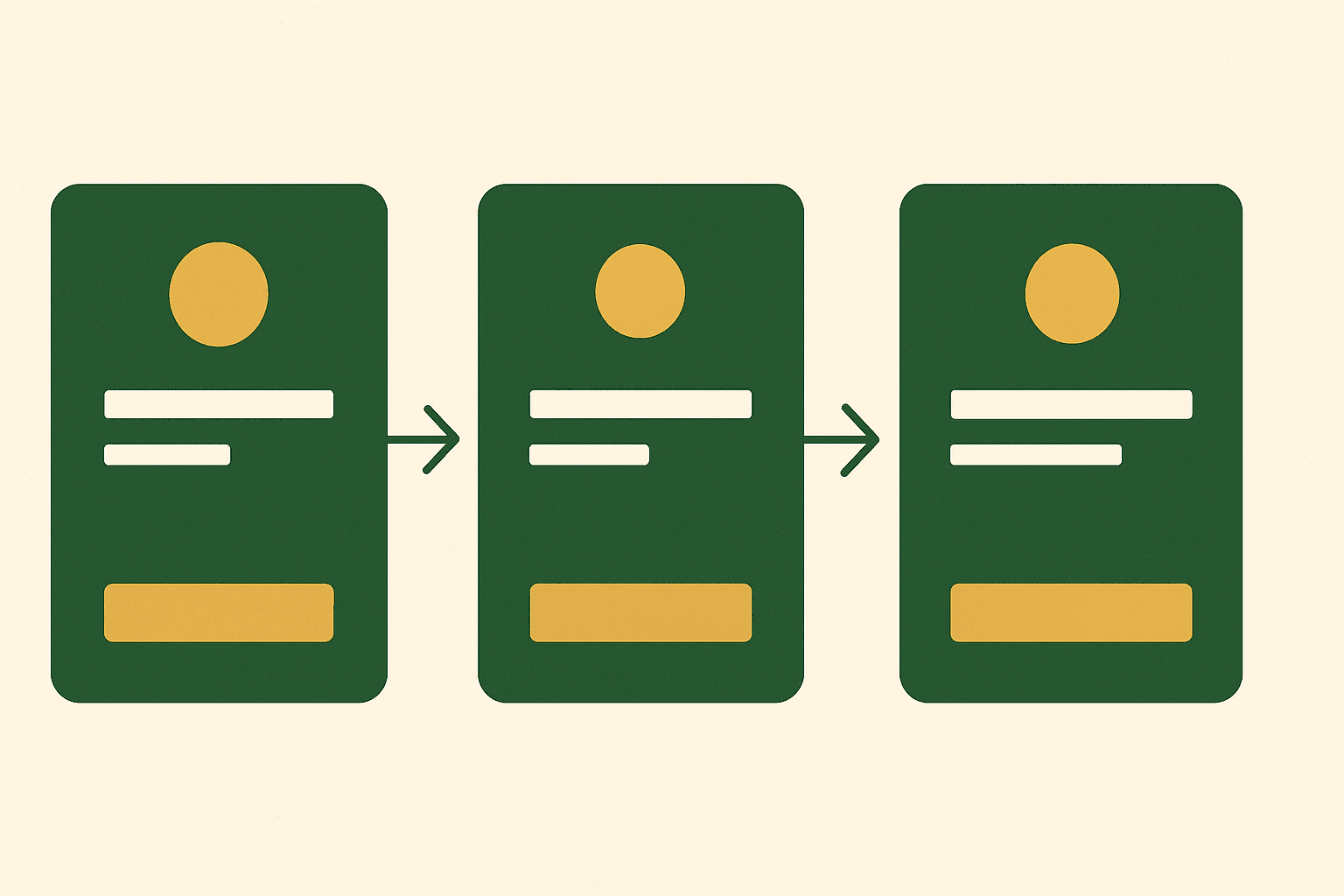
Every unnecessary step, field, or decision point in your checkout is an opportunity for the customer to leave. Here is how to systematically reduce friction:
Enable guest checkout
This is non-negotiable. In your Shopify admin under Settings > Checkout, ensure that customer accounts are set to "optional" or "disabled." Never require account creation before purchase. You can encourage account creation after the purchase is complete, when the customer is already invested.
Use one-page checkout
Shopify's one-page checkout reduces the number of page loads and perceived steps. If your store has not migrated from the legacy three-step checkout, this is a free improvement. For detailed implementation guidance, see our complete checkout optimisation guide.
Minimise form fields
Audit every field in your checkout. For a standard DTC store, you need: email, name, address, and payment. That is it. Remove optional fields like company name, phone number (unless required for delivery), and second address lines unless they serve a specific business purpose.
Offer express checkout
Shop Pay, Apple Pay, and Google Pay allow returning customers to complete checkout with a single tap. These bypass the form entirely, reducing completion time from minutes to seconds. Ensure express checkout buttons are enabled and prominently displayed on both product pages and the checkout page.
The cart experience itself
Cart abandonment does not always happen at checkout. Many customers abandon before they even reach checkout — from the cart page or cart drawer itself. The cart experience is the bridge between browsing and buying, and it deserves careful attention.
Cart drawer versus cart page
A cart drawer (slide-out panel) keeps the customer on the current page, making it easy to continue shopping. A dedicated cart page removes the customer from the browsing context, which can interrupt the shopping flow. For most stores, we recommend a cart drawer as the default experience, with a link to a full cart page for customers who prefer it.
What the cart should communicate
- Clear product information. Product name, variant, quantity, and price per item. Include a thumbnail image so customers can visually confirm what they are buying.
- Easy quantity adjustment. Plus/minus buttons are better than dropdown selectors. Include a remove button that is easy to find but not easy to tap accidentally.
- Running total. Update instantly when quantities change. Include any discounts, estimated shipping, and the grand total.
- Free shipping progress. If you offer a threshold, show a progress bar. This reduces abandonment (customers know what shipping will cost) and increases AOV (customers add items to reach the threshold).
- Estimated delivery. "Order within 2 hours for next-day delivery" creates urgency and sets expectations. Both reduce abandonment.
For a deeper look at building effective cart experiences on Shopify, explore our Shopify apps including Smart Cart OS, which is purpose-built for this.
Abandoned cart email sequences that recover revenue
On-site optimisation prevents abandonment. Email sequences recover it. Together, they form a complete cart abandonment strategy. If you are not running abandoned cart emails, you are leaving the easiest revenue on the table.
The three-email sequence
The optimal abandoned cart email sequence uses three emails, each with a different purpose:
Email 1: The reminder (1 hour after abandonment)
This is a simple, helpful reminder. No discount, no pressure. Subject line examples: "You left something behind" or "Still thinking it over?" Include the product image, name, and price. Link directly back to the cart with items pre-loaded. Many abandonments are genuine interruptions — a timely reminder is enough.
Email 2: The objection handler (24 hours after abandonment)
If the reminder did not work, the customer likely has a specific objection. This email should address common objections: highlight your returns policy, include a customer review, mention your delivery speed, or reinforce any guarantees. Still no discount — save that for the final email.
Email 3: The incentive (48-72 hours after abandonment)
For customers who have not converted after two touches, a modest incentive can tip the balance. A 5-10% discount or free shipping offer gives them a reason to act now rather than never. Include urgency: "This offer expires in 24 hours." Make the discount code unique to prevent sharing.
Platform choice for abandoned cart emails
Shopify's built-in abandoned checkout email is functional but limited — it only sends a single email and offers minimal customisation. For a proper multi-email sequence with segmentation, dynamic content, and analytics, you need a dedicated email platform.
We use and recommend Klaviyo for abandoned cart flows because it integrates natively with Shopify, supports multi-email sequences with conditional logic, includes product recommendation blocks, and provides revenue attribution so you can see exactly how much each email recovers. Learn more in our guide to essential Klaviyo flows for ecommerce.

Exit-intent and on-site recovery
Exit-intent popups detect when a customer is about to leave the page (typically by tracking mouse movement toward the browser's close button) and present a last-chance offer. On mobile, equivalent triggers include back-button taps or rapid scrolling upward.
When exit-intent works
Exit-intent is most effective on cart pages and checkout pages — locations where the customer has already demonstrated purchase intent. Showing an exit-intent popup on a category page or blog post is annoying. Showing one when someone is about to abandon a £150 cart is useful.
What to show in an exit-intent popup
- A reminder of what they are leaving behind. Show the product image and name. Visual reminders are more effective than text-only messages.
- A modest incentive. Free shipping or 5-10% off. Do not use large discounts — they devalue your brand and train customers to expect discounts.
- An email capture fallback. If the customer is not ready to buy, capture their email for follow-up. "Save your cart — enter your email and we will send you a link" converts surprisingly well because it serves the customer's interest (convenience) rather than yours (marketing).
Important: exit-intent popups should have a clear close button, should not fire more than once per session, and should respect the customer's decision if they close it. Aggressive or repeated popups damage trust and brand perception.
Retargeting abandoned cart visitors
For customers who abandon without providing an email address (and therefore cannot receive abandoned cart emails), paid retargeting is the primary recovery channel.
Meta (Facebook/Instagram) dynamic product ads
Dynamic product ads automatically show the specific products a customer viewed or added to cart. They work because they are relevant — the customer sees the exact items they were considering, not generic brand advertising. For Shopify stores, the Meta pixel and Conversions API integration handles the data layer. The catalogue sync is managed through the Facebook & Instagram sales channel.
Google Ads remarketing
Google remarketing lists for search ads (RLSA) allow you to bid more aggressively on branded and product search terms for customers who have previously abandoned their cart. Display remarketing shows visual ads across the Google Display Network. Both are effective for cart recovery, but search remarketing typically delivers higher ROI because the customer is actively searching.
Timing and frequency
Retargeting should start within 1-2 hours of abandonment and run for 7-14 days. Beyond two weeks, the purchase intent has typically expired. Limit frequency to 3-5 impressions per day to avoid fatigue. Exclude customers who have already purchased — this is a common oversight that wastes budget and irritates customers.
Measuring and benchmarking
Track these metrics weekly to understand your cart abandonment performance and the impact of your recovery efforts:
| Metric | Where to find it | Good benchmark |
|---|---|---|
| Cart abandonment rate | GA4 funnel report | 55-65% |
| Abandoned cart email recovery rate | Klaviyo flow analytics | 10-15% |
| Cart-to-checkout rate | GA4 enhanced ecommerce | 55-70% |
| Revenue recovered (email) | Klaviyo revenue attribution | 3-5% of total revenue |
| Revenue recovered (retargeting) | Meta/Google attribution | 1-3% of total revenue |
Segment your abandonment rate by device (mobile vs desktop), by traffic source (paid vs organic), and by new vs returning customers. Each segment often reveals different problems requiring different solutions. This kind of analysis is core to an ongoing CRO programme.
Advanced recovery tactics
SMS recovery
For customers who have opted into SMS marketing, abandoned cart text messages achieve open rates above 95% and click-through rates of 15-30% — significantly higher than email. The immediacy of SMS makes it particularly effective for time-sensitive products or limited-stock items. Klaviyo supports SMS as part of the same abandoned cart flow, allowing you to coordinate email and SMS touchpoints.
Browser push notifications
Web push notifications can reach customers who have opted in but not provided an email address. They appear directly in the browser and achieve click-through rates of 5-10%. The audience is smaller (only customers who accepted push notifications), but the cost is effectively zero.
Cart persistence across devices
A significant portion of cart abandonment happens when customers start browsing on mobile and intend to complete the purchase on desktop (or vice versa). Shopify handles this natively for logged-in customers, but guest shoppers lose their cart when switching devices. Encouraging Shop account login (which persists across devices) addresses this gap.
Personalised product recommendations in recovery emails
If the abandoned product is out of stock in the customer's size or preferred variant, showing similar alternatives in the recovery email prevents a dead end. Klaviyo's product recommendation engine can dynamically populate alternatives based on the customer's browsing history and the abandoned product's category.
Building a complete cart recovery system
Reducing cart abandonment is not about implementing a single tactic. It is about building a system that works at every stage: preventing abandonment through transparency and UX, recovering abandonments through email and SMS, and re-engaging lost customers through retargeting.
Start with the highest-impact, lowest-effort changes: pricing transparency, guest checkout, and a basic three-email abandoned cart sequence. Then layer in advanced tactics as you measure results and identify specific opportunities.
The checkout customisation options available on Shopify Plus open up additional possibilities for brands ready to invest in a truly optimised purchase experience.
If your store is losing revenue to cart abandonment and you want to understand where the biggest opportunities are, our Shopify development and Klaviyo email marketing teams can help. Start a conversation — we will show you what is recoverable.